What Is a Roundtable Discussion? Format, Benefits and How to Host One Well
Ask ten people what a roundtable is and you will get ten slightly different answers. Some picture a boardroom, some a panel on a stage, some a polite lunch. A real roundtable is none of these. It is a small, focused conversation in which everyone at the table is expected to think out loud. Done well, it is one of the most valuable formats an organisation can run.
What is a roundtable discussion?
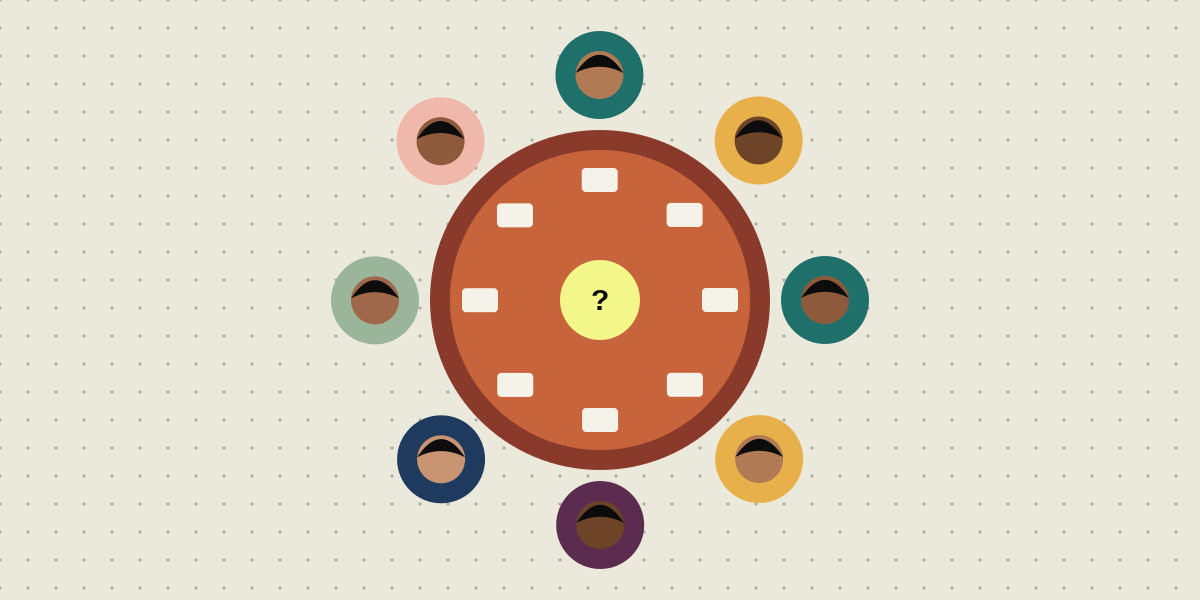
A roundtable discussion is a structured conversation among a small group of people who share an interest in one question. Participants sit as equals, usually around a single table, and everyone contributes. A moderator keeps the conversation moving, but there is no stage, no audience and no long presentation.
The name comes from the idea of a round table, which has no head. Nobody sits in the position of authority, so nobody owns the conversation. That small piece of symbolism matters more than it seems. People speak differently when they are not performing for an audience.
How a roundtable is different from a panel
The two formats are often confused because both involve a group of people talking about a topic. The difference lies in who is talking and who is listening.
| Roundtable | Panel discussion | |
|---|---|---|
| Group size | Usually 8-20 participants | 3-5 speakers plus an audience |
| Who speaks | Everyone at the table | Mainly the panellists |
| Goal | Shared thinking and honest exchange | Presenting expert views |
| Setting | A closed or semi-closed room | A stage facing rows of seats |
| Output | Insights, decisions or a shared summary | Information for the audience |
A panel is a performance, even a good one. A roundtable is a working session.
Why roundtables work so well
Depth. A conference session has to stay general because the audience is mixed. A roundtable can go straight to the difficult part of a problem, because everyone in the room already understands the basics.
Honesty. People are far more candid in a room of twelve than in a hall of three hundred, especially when clear rules protect what they say.
Peer learning. Participants often learn more from each other than from any expert. A head of HR at one company may have already solved the problem that is keeping her counterpart awake at another.
Lasting relationships. After two hours of real conversation, people leave knowing each other, not just knowing who was on stage.
When a roundtable is the right choice
Roundtables shine when the question is complex and there is no single right answer. Good examples include how mid-sized manufacturers are adopting automation, how schools are handling AI in classrooms, or how founders are hiring in a tight market. They are less suitable when you simply need to share information widely. In that case, a webinar or a conference session is more efficient.
How to host a roundtable in seven steps
1. Choose one sharp question
The topic is the most important decision you will make. "The future of AI" is too broad; the conversation will drift into predictions nobody can test. "What has actually worked when introducing AI tools to customer-service teams?" is a question participants can answer from experience.
2. Invite the right mix
Aim for ten to fifteen participants with relevant experience and genuinely different points of view. Seniority should be broadly similar, so nobody feels they must defer to someone else. A room full of people who already agree produces a pleasant but forgettable afternoon.
3. Brief participants in advance
A week before, send the question, two or three sub-questions and the house rules. Ask each person to come with one example from their own work. This simple step lifts the quality of the discussion more than anything else.
4. Set the ground rules
Many roundtables use the Chatham House Rule: participants may use the information shared, but may not reveal who said it. Announce the rule at the start, and repeat it if new people join. If the session will be recorded or summarised, say so clearly.
5. Moderate actively
A good moderator talks less than anyone else but works harder. Open with short introductions in which each person answers a simple, relevant question. Bring in quieter voices by name. Gently move on from anyone who starts to dominate. Keep bringing the conversation back to the question when it drifts.
6. Keep the timing tight
Ninety minutes to two hours is the sweet spot. Shorter, and the conversation never goes deep. Longer, and energy fades. If food is involved, serve it before or after, not during the main discussion.
7. Share a useful summary
Within a few days, send participants a short summary of the main ideas, without attributing comments to individuals. If you publish anything externally, get permission first. A good summary turns a pleasant conversation into something people can act on.
Common mistakes
- Inviting too many people. Beyond twenty, a roundtable quietly turns into a panel with an audience.
- Letting the host company pitch. The moment a sponsor starts selling, trust in the room drops.
- Choosing a topic that is too broad. Broad topics invite opinions; sharp topics invite experience.
- Having no moderator. Without one, the most confident voices take over.
- Not following up. If nothing happens afterwards, participants will be less willing to come next time.
Virtual roundtables
Roundtables can work online, but they need extra care. Keep the group smaller, around eight people. Ask everyone to keep their cameras on, use a shared document for notes, and give each participant a clear turn to speak in the first ten minutes so nobody stays silent for the whole session.
Questions a moderator can keep in their pocket
Even good conversations stall sometimes. Experienced moderators keep a few simple questions ready to restart the energy or take the discussion deeper:
- "Can you give us an example of that from your own work?"
- "Who sees this differently?"
- "What would you do if you had to decide this tomorrow?"
- "What did you try that did not work?"
- "If we met again in a year, what would you hope had changed?"
Questions about failure are especially useful. People are often more generous and more honest when talking about what went wrong, and those stories are usually the ones others learn most from.
Closing well matters too. In the last ten minutes, ask each participant for one sentence: the idea they are taking away, or the thing they will do differently. It gives everyone a final voice, and it hands the organiser a ready-made summary of what the session achieved.
One last tip: resist the urge to fill every silence. A pause of a few seconds after a hard question feels long to the moderator, but it is often exactly the time a participant needs to decide whether to share something genuinely useful. Let the quiet do some of the work, and the best contributions of the session often arrive just after it.
What participants gain
For individuals, a roundtable is a rare chance to test ideas with peers outside their own organisation, and to build relationships that last longer than a business card exchange. For organisations, it is a way to understand an industry problem from several angles at once, and to be seen as a thoughtful host rather than another sponsor.
Breitordo designs and hosts roundtables for businesses, institutions and communities. You can explore roundtables on Breitordo, talk to us about hosting one, or, if you are planning something larger, read our corporate event planning guide.
Sources
Facts, figures and quoted rules in this article come from the sources below. The wording of the article is our own.
- Chatham House Rule, Chatham House (Royal Institute of International Affairs). Official wording and explanation of the Rule.
Frequently asked questions
How many people should attend a roundtable discussion?
Usually between 8 and 20. Ten to fifteen is a good size for most topics.
What is the difference between a roundtable and a panel?
In a roundtable everyone takes part as equals. In a panel, a few speakers talk while an audience listens.
How long should a roundtable last?
Most work best at 90 minutes to two hours.
What is the Chatham House Rule?
Participants may use the information shared, but may not reveal who said it.