Empires
The Mughal Empire: From Babur to Bahadur Shah Zafar
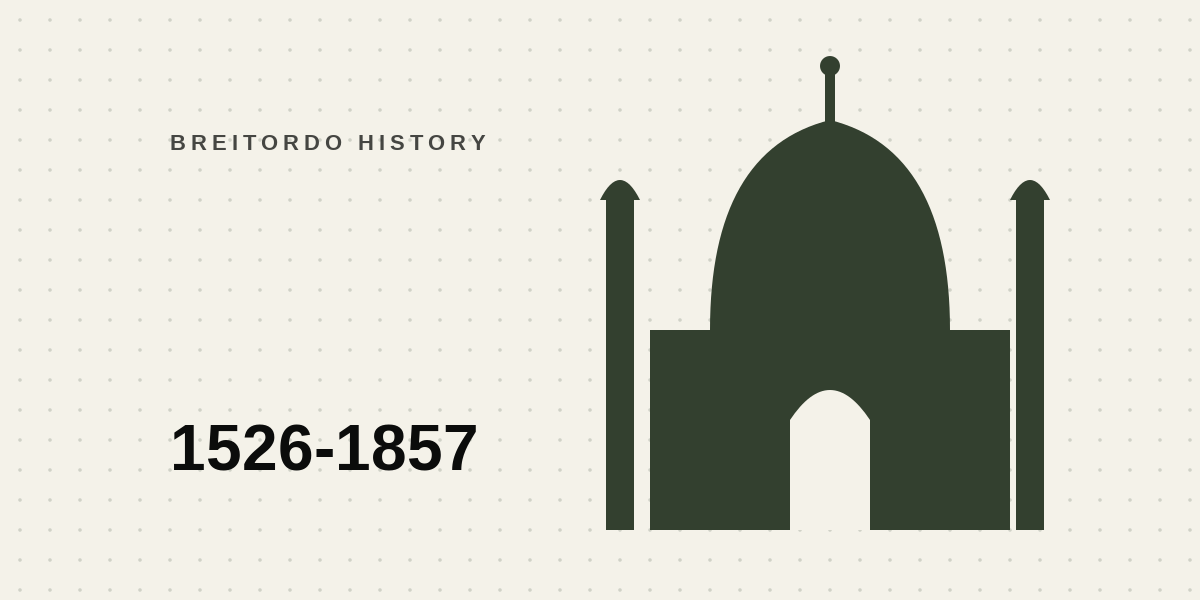
The Mughal Empire was founded by Babur after his victory at the First Battle of Panipat in 1526. Under rulers such as Akbar, Jahangir, Shah Jahan and Aurangzeb, it grew into one of the largest and wealthiest states in the world, covering most of the Indian subcontinent. The Mughals built a strong administration based on the mansabdari system and land revenue, and their patronage produced famous monuments such as the Taj Mahal and Red Fort, as well as miniature painting and literature. After Aurangzeb's death in 1707, the empire declined, and it formally ended in 1857 when the British exiled Bahadur Shah Zafar.
Quick facts
- Founded
- 1526, after the First Battle of Panipat
- Founder
- Zahir-ud-din Muhammad Babur
- Capitals
- Agra, Fatehpur Sikri, Lahore, Delhi (Shahjahanabad)
- Greatest extent
- Late 17th century under Aurangzeb
- Administration
- Mansabdari system; land revenue system developed under Akbar and Raja Todar Mal
- Ended
- 1857, with the exile of Bahadur Shah Zafar
Introduction
Few dynasties have left as visible a mark on India as the Mughals. The Taj Mahal, the Red Fort, Humayun's Tomb and Fatehpur Sikri are among the most famous monuments in the world. But the Mughal story is about much more than buildings. For more than two centuries, the Mughals governed a vast and diverse empire, developing systems of administration, revenue and culture that shaped the subcontinent long after their power faded.
This chapter traces the empire from its founding by Babur to its slow decline and final end in 1857, looking at its rulers, how it was governed, its economy and society, and its cultural achievements.
Babur and the founding of the empire
Babur was born in 1483 in the Fergana valley in Central Asia. He was descended from Timur on his father's side and from Chinggis Khan on his mother's side. After losing his homeland, he established himself in Kabul and turned his attention towards India.
In April 1526, at the First Battle of Panipat, Babur defeated Ibrahim Lodi, the Sultan of Delhi. Babur's army was smaller, but he used field artillery and a tactical formation with carts and cannons, combined with fast cavalry, to great effect. The following year, he defeated a confederacy of Rajput rulers led by Rana Sanga of Mewar at the Battle of Khanwa.
Babur wrote a remarkable autobiography in Chagatai Turkish, the Baburnama. It records his campaigns, but also his observations of nature, people and landscapes, and his longing for the melons and gardens of his homeland. He died in 1530.
Humayun and Sher Shah
Babur's son Humayun faced serious challenges. His most dangerous rival was Sher Shah Suri, an Afghan leader from Bihar, who defeated Humayun at Chausa in 1539 and Kannauj in 1540. Humayun was forced into exile and spent years wandering, eventually finding refuge at the court of the Safavid Shah of Persia.
Sher Shah ruled northern India for only about five years, but he introduced important reforms. He improved land revenue assessment, issued a silver coin called the rupiya, which gave its name to the modern rupee, and improved roads, rest houses (sarais) and the postal system, including the great road from Bengal to the north-west, later known as the Grand Trunk Road.
After Sher Shah's death, his successors were weaker. In 1555, Humayun recaptured Delhi with Persian help, but he died the following year after falling down the steps of his library.
Akbar: building an empire
Akbar became emperor in 1556 at the age of thirteen. In the same year, his regent Bairam Khan led the Mughal army to victory against Hemu at the Second Battle of Panipat. Akbar soon took personal control and ruled for nearly fifty years, until 1605.
Akbar expanded the empire across northern and central India, Gujarat, Bengal, Kashmir and parts of the Deccan. He built alliances with many Rajput rulers, including through marriage, and gave them high positions in the army and administration, while fighting those who resisted, such as Maharana Pratap of Mewar, whom the Mughals fought at the Battle of Haldighati in 1576.
Akbar is especially remembered for his religious policy. He abolished the jizya, a tax on non-Muslims, in 1564, and built a hall called the Ibadat Khana at Fatehpur Sikri where scholars of different faiths debated. He developed the idea of sulh-i kul, often translated as "peace with all" or "universal tolerance". His court historian, Abul Fazl, wrote the Akbarnama and the Ain-i-Akbari, which describe his reign and administration in great detail.
Administration: mansabdars and land revenue
The Mughal state was organised around the mansabdari system. Officials, called mansabdars, held ranks (mansabs) expressed in numbers. Each rank had two parts: zat, which indicated personal status and salary, and sawar, which indicated the number of horsemen the mansabdar had to maintain. Mansabdars could be paid in cash or through the right to collect revenue from a territory, called a jagir. Jagirs were usually transferred regularly, to prevent officials from building local power bases.
Land revenue was the main source of income. Under Akbar, his finance minister Raja Todar Mal developed a system of measuring land and assessing revenue based on average produce and prices over several years, known as the zabt or dahsala system in many regions.
The empire was divided into provinces called subas, each with a governor (subadar) and other officials responsible for finance, justice and military affairs. This structure allowed the emperor to govern a vast territory with considerable control.
Jahangir and Shah Jahan
Jahangir (ruled 1605-1627) continued his father's policies. He was a keen naturalist and patron of painting. His wife Nur Jahan was one of the most powerful women in Mughal history, issuing orders and coins in her name. During Jahangir's reign, the English ambassador Sir Thomas Roe visited the court on behalf of King James I, seeking trading privileges for the English East India Company.
Shah Jahan (ruled 1628-1658) presided over a period of great splendour. He is best known for his buildings. After the death of his wife Mumtaz Mahal in 1631, he built the Taj Mahal in Agra as her tomb, a project that took more than a decade and involved thousands of workers. He also built a new capital at Delhi, called Shahjahanabad, with the Red Fort and the Jama Masjid. His Peacock Throne became legendary for its jewels.
In 1657-1658, a war of succession broke out among Shah Jahan's sons. Aurangzeb defeated his brothers, including Dara Shikoh, a scholar who had translated Upanishads into Persian, and imprisoned his father in the Agra Fort, where Shah Jahan died in 1666.
Aurangzeb: expansion and strain
Aurangzeb ruled from 1658 to 1707. Under him, the empire reached its greatest territorial extent, especially after the conquest of the Deccan Sultanates of Bijapur (1686) and Golconda (1687).
His reign was also a time of growing strain. He reimposed the jizya in 1679, and his religious policies are a subject of continuing debate among historians. He faced rebellions and resistance from the Marathas under Shivaji and his successors, from Rajputs, Jats, Satnamis and Sikhs. The ninth Sikh Guru, Guru Tegh Bahadur, was executed in Delhi in 1675 on Aurangzeb's orders.
Aurangzeb spent the last twenty-five years of his life campaigning in the Deccan against the Marathas. These long wars were very costly and drained the empire's resources. When he died in 1707, the empire was large but stretched and exhausted.
Economy, trade and society
The Mughal empire was one of the richest states in the world. Agriculture produced grain, cotton, indigo, sugarcane and other crops. Indian textiles, especially cotton and silk from Gujarat and Bengal, were in great demand around the world, and the empire attracted large quantities of silver through trade.
Cities such as Agra, Delhi, Lahore, Surat and Dhaka were great centres of craft and commerce. European trading companies, including the Portuguese, Dutch, English and French, set up trading posts. At first they were small players, dependent on Mughal permission.
Society was diverse and hierarchical. Nobles and mansabdars lived in luxury, while peasants carried the burden of revenue. Merchants, bankers and artisans formed important communities. Persian was the language of administration, while languages such as Hindavi (an early form of Hindi-Urdu), Bengali, Marathi and Punjabi flourished among the people.
Art, architecture and literature
Mughal architecture combined Persian, Central Asian and Indian traditions. Humayun's Tomb in Delhi, built in the 1560s and 1570s, introduced the garden tomb design that later inspired the Taj Mahal. Akbar's city of Fatehpur Sikri, built of red sandstone, includes the Buland Darwaza and the Panch Mahal. Gardens laid out in the charbagh style, divided into four parts by water channels, were a Mughal favourite.
Mughal miniature painting developed in imperial workshops where Persian and Indian artists worked together. Paintings illustrated histories, epics, portraits and natural subjects. Under Jahangir, artists such as Ustad Mansur painted birds and animals with scientific precision.
Literature flourished in Persian, and translation projects made Sanskrit texts such as the Mahabharata available in Persian. Poetry in Persian and, later, Urdu thrived. Music also flourished, and the legendary singer Tansen was one of the "nine jewels" traditionally associated with Akbar's court.
Women at the Mughal court
Women of the Mughal household were far more influential than the image of a secluded harem might suggest. Babur's grandmother and other senior women advised him in his early years. Humayun's sister Gulbadan Begum wrote the Humayun-nama, a valuable account of her brother's life. Akbar's foster mother Maham Anga was influential in his early reign.
Nur Jahan not only issued orders but also designed textiles, patronised architecture and commissioned the tomb of her father, Itimad-ud-Daulah, in Agra, a building whose delicate inlay work foreshadowed the Taj Mahal. Shah Jahan's daughter Jahanara Begum was a wealthy and cultured princess who sponsored mosques, gardens and the planning of Chandni Chowk in Delhi.
These women controlled property, trade, charities and buildings, showing that power in the Mughal world flowed through many channels.
Decline and end of the empire
After 1707, the empire declined rapidly. A series of weak or short-reigning emperors, wars of succession and powerful nobles undermined central authority. Provincial governors in Hyderabad, Bengal and Awadh became effectively independent. The Marathas expanded their power across large parts of India.
In 1739, the Persian ruler Nadir Shah invaded India and sacked Delhi, carrying away enormous wealth, including the Peacock Throne. Later, the Afghan ruler Ahmad Shah Durrani invaded several times.
After the Battle of Plassey (1757) and the Battle of Buxar (1764), the British East India Company gained control of Bengal and the right to collect its revenue (the diwani), granted by the Mughal emperor Shah Alam II in 1765. Over time, the Mughal emperor became a figurehead under British control in Delhi.
During the revolt of 1857, rebels proclaimed the elderly emperor Bahadur Shah Zafar as their leader. After the revolt was suppressed, the British tried him and exiled him to Rangoon (Yangon), where he died in 1862. The Mughal dynasty had come to an end.
Legacy
The Mughal legacy is everywhere in South Asia: in monuments, cities, gardens, food, music, painting, language and systems of administration. Their revenue methods influenced later governments, including the British. Their courts brought together artists and thinkers from many traditions.
Historians continue to debate many aspects of Mughal history, including religious policy, the causes of decline and the experience of ordinary people. Studying the Mughals is a good way to practise looking at historical evidence from several angles and understanding how a great empire can rise, flourish and fade.
Important personalities
Babur
Founder, ruled 1526-1530Won the First Battle of Panipat and wrote the Baburnama.
Akbar
Ruled 1556-1605Expanded the empire, built alliances, developed administration and promoted sulh-i kul.
Nur Jahan
Empress, wife of JahangirExercised great political influence during Jahangir's reign.
Shah Jahan
Ruled 1628-1658Built the Taj Mahal, Red Fort and Jama Masjid.
Aurangzeb
Ruled 1658-1707Brought the empire to its greatest extent but faced costly wars and rebellions.
Bahadur Shah Zafar
Last Mughal emperorProclaimed leader of the 1857 revolt; exiled to Rangoon by the British.
Important battles
First Battle of Panipat
1526Babur defeats Ibrahim Lodi.
Battle of Khanwa
1527Babur defeats Rana Sanga's confederacy.
Second Battle of Panipat
1556Akbar's forces defeat Hemu.
Battle of Haldighati
1576Mughal forces fight Maharana Pratap of Mewar.
Battle of Karnal
1739Nadir Shah defeats the Mughal army and later sacks Delhi.
Timeline
- 1526
First Battle of Panipat; Mughal rule begins.
- 1540
Sher Shah Suri defeats Humayun.
- 1555
Humayun recaptures Delhi.
- 1556
Akbar becomes emperor; Second Battle of Panipat.
- 1564
Akbar abolishes the jizya.
- 1605
Jahangir becomes emperor.
- 1628
Shah Jahan becomes emperor.
- 1632
Construction of the Taj Mahal begins.
- 1658
Aurangzeb takes the throne.
- 1707
Death of Aurangzeb.
- 1739
Nadir Shah sacks Delhi.
- 1765
Company receives the diwani of Bengal.
- 1857
Revolt; Bahadur Shah Zafar exiled.
Historical sources and further reading
This article summarises widely accepted historical accounts. For deeper study, see:
- The Mughal Empire (The New Cambridge History of India, I.5)-John F. Richards, Cambridge University Press, 1993.
- Medieval India: From Sultanat to the Mughals (2 volumes)-Satish Chandra, Har-Anand Publications, 1997-1999.
- The Baburnama: Memoirs of Babur, Prince and Emperor-Translated by Wheeler M. Thackston, Oxford University Press, 1996.
- The Agrarian System of Mughal India-Irfan Habib, Asia Publishing House, 1963.
- India in the Persianate Age, 1000-1765-Richard M. Eaton, Allen Lane, 2019.
- Mughal dynasty, Encyclopaedia Britannica (online reference).
Frequently asked questions
Who founded the Mughal Empire?
Babur, after defeating Ibrahim Lodi at the First Battle of Panipat in 1526.
What was the mansabdari system?
A system of ranking officials (mansabdars) by zat and sawar, determining their status, salary and the cavalry they had to maintain.
Who built the Taj Mahal?
Shah Jahan built the Taj Mahal in Agra as a tomb for his wife Mumtaz Mahal, beginning in the early 1630s.
When did the Mughal Empire end?
It formally ended in 1857-1858, when the British exiled the last emperor, Bahadur Shah Zafar, after the revolt of 1857.