Academic Bank of Credits and APAAR ID Explained: What Every College Student Should Know
If you have joined or applied to a college in India recently, you have probably been asked for an ABC ID or an APAAR ID. Many students create one without quite knowing what it does. This guide explains the system in plain language and why it matters for the way degrees now work.
The problem these systems solve
For a long time, a student's academic record lived on paper, scattered across mark sheets from different institutions. If you moved city, changed college or dropped out for a year, much of what you had already learned was difficult to carry forward. Leaving a degree halfway usually meant leaving with nothing to show for it.
The National Education Policy 2020 proposed a more flexible system, where learning is measured in credits that belong to the student and can be carried across institutions and over time. The Academic Bank of Credits and the APAAR ID are the digital infrastructure that makes that possible.
What the Academic Bank of Credits is
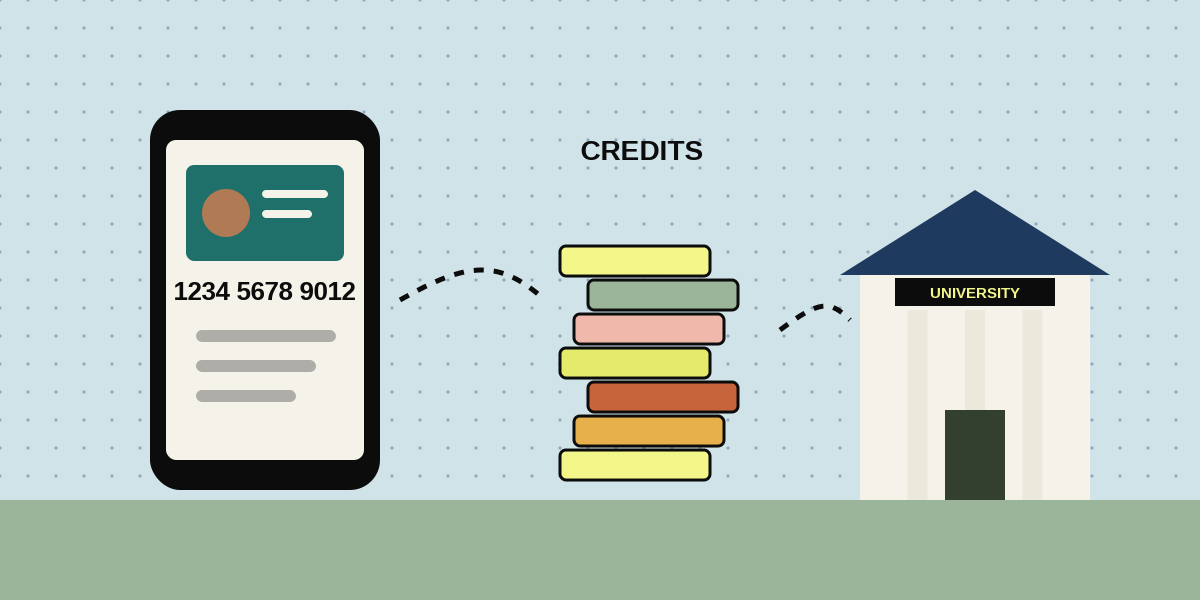
The Academic Bank of Credits (ABC) is a national digital repository, set up by the Ministry of Education and operated with the UGC, where recognised higher education institutions deposit the credits that students earn. You can think of it like a bank account for learning: credits go in when you complete courses, and they can later be used towards a certificate, diploma or degree.
Three ideas are central to how it works:
- Accumulation: credits from completed courses are stored in your account over time.
- Transfer: within the rules of the institutions involved, credits can be recognised by another institution, for example if you move to a different university.
- Redemption: when you have earned enough credits of the right kind, an institution can award you the corresponding qualification.
Credits are deposited only by institutions, through the National Academic Depository, which also stores digital degree certificates and mark sheets. A student cannot add or edit credits personally, which protects the integrity of the record.
What the APAAR ID is
APAAR stands for Automated Permanent Academic Account Registry. It is a unique 12-digit identity number for a learner, introduced under the "One Nation, One Student ID" initiative. The idea is that a student keeps the same academic identity from school through college and beyond, so that records, certificates and credits can be found and verified in one place.
According to the Ministry of Education's July 2026 explainer, students register on the ABC portal and receive an ID, now referred to as the APAAR ID, linked to their Aadhaar and DigiLocker account. Institutions then upload academic data against that ID.
How this connects to the four-year degree and multiple exits
Under the UGC's credit framework for undergraduate programmes, a student who completes the first year can leave with a certificate, after two years with a diploma, after three years with a bachelor's degree, and after four years with an honours degree or honours with research. The Academic Bank of Credits keeps track of what you have completed, so that if you leave after two years and return later, your earlier credits are still recorded and can count towards the rest of the degree, within the time limits and rules set by the regulations and your institution.
Credits from approved online courses, such as many courses on the SWAYAM platform, can also be counted where your institution allows it, which gives students more choice in what they study.
How to create your ID
The process can change, so always follow the instructions on the official portal, but the usual steps are:
- Go to the official Academic Bank of Credits website or open DigiLocker.
- Sign in or register using your Aadhaar-linked mobile number for OTP verification.
- Choose your institution from the list of registered institutions and enter the requested details, such as admission year and enrolment number.
- Generate the ID and save or download the document that shows it.
- Share the ID with your college when asked, usually during admission or examination registration.
Many universities run help desks or camps to create IDs for their students, and the government has also offered help through Common Service Centres.
Common problems and how to avoid them
- Name or date of birth mismatch: if your details differ between Aadhaar and your school records, fix the mismatch early. It is the most common reason for errors.
- Credits not showing: credits appear only after your institution uploads results. If they are missing well after results are out, ask your college examination office rather than trying to create a new ID.
- Creating two IDs: if you already have an ID from school or another college, use it again. Duplicate accounts make records harder to merge.
- Sharing credentials: never give your DigiLocker password or OTP to anyone, including agents who offer to "do it for you".
A simple example
Imagine a student who joins a four-year undergraduate programme in commerce. After completing the first year, family circumstances force her to leave and work for two years. Under the older system, she might have had nothing formal to show for that year. Under the credit framework, she can leave with a certificate, and the credits she earned stay in her Academic Bank of Credits account. When she is ready to return, she can apply to rejoin, at the same or another participating institution, and those credits can count towards the diploma or degree, subject to the time limits and admission rules that apply. Along the way she might also complete approved online courses, whose credits can be added if her institution accepts them.
That flexibility is the main promise of the system: learning that happens at different times and places can still add up to a recognised qualification.
What institutions need to do
For the system to work, colleges and universities must register on the platform, map their programmes and courses to credits, and upload results for every student in time. Officials have acknowledged that uploading data at scale has been a challenge for some institutions, which is why students sometimes find their accounts incomplete. Institutions that treat ABC uploads as part of the routine examination process, rather than an extra task at the end of the year, avoid most of these problems and save students a lot of anxiety.
Questions students often ask
- Do I need a new ID when I change college? No. The same ID is meant to stay with you.
- Do credits expire? Credits are stored, but how long they can be used towards a particular qualification depends on the rules of the programme and institution.
- Can foreign students get an ID? Universities have published processes for international students to register as well. Ask your international office.
- Is my data shared publicly? No. Access to records is controlled, and sharing generally requires your consent through DigiLocker.
Why it matters for your future
A single, verified academic record makes life easier when you apply for further study, scholarships or jobs, because institutions and employers can verify qualifications digitally. It also makes flexible learning realistic: taking a break for work or family no longer has to mean starting from zero. As with any system that holds personal data, read what you consent to and keep your account secure.
For more on how degrees are structured, read our guide to degrees, levels and pathways.
Sources
Facts, figures and quoted rules in this article come from the sources below. The wording of the article is our own.
- Academic Bank of Credits and APAAR: Building India's Lifelong Learning Ecosystem, Press Information Bureau, Ministry of Education, 2026
- Academic Bank of Credits - official portal and FAQ, Ministry of Education / UGC
- APAAR - One Nation One Student ID, Ministry of Education
- Academic Bank of Credit launched through CSCs; ABC ID mandatory for admission, Press Information Bureau, 2024
- National Education Policy 2020, Ministry of Education, Government of India, 2020
Frequently asked questions
Are the ABC ID and the APAAR ID the same thing?
They are now linked. The Ministry of Education describes the APAAR ID as a 12-digit student identity linked to the Academic Bank of Credits, and the ABC ID is referred to as the APAAR ID in recent official material.
Can I add credits to my account myself?
No. Only registered institutions can deposit credits, based on the courses you have completed and the results they have recorded.
Is an ABC or APAAR ID needed for college admission?
The Ministry of Education has said that an ABC ID is required for admission to colleges and universities, and most institutions ask for it during admission or examination registration.
Where do I create the ID?
Through the official Academic Bank of Credits portal or DigiLocker. Many institutions also help students create the ID during admission.