The Weaver's Granddaughter
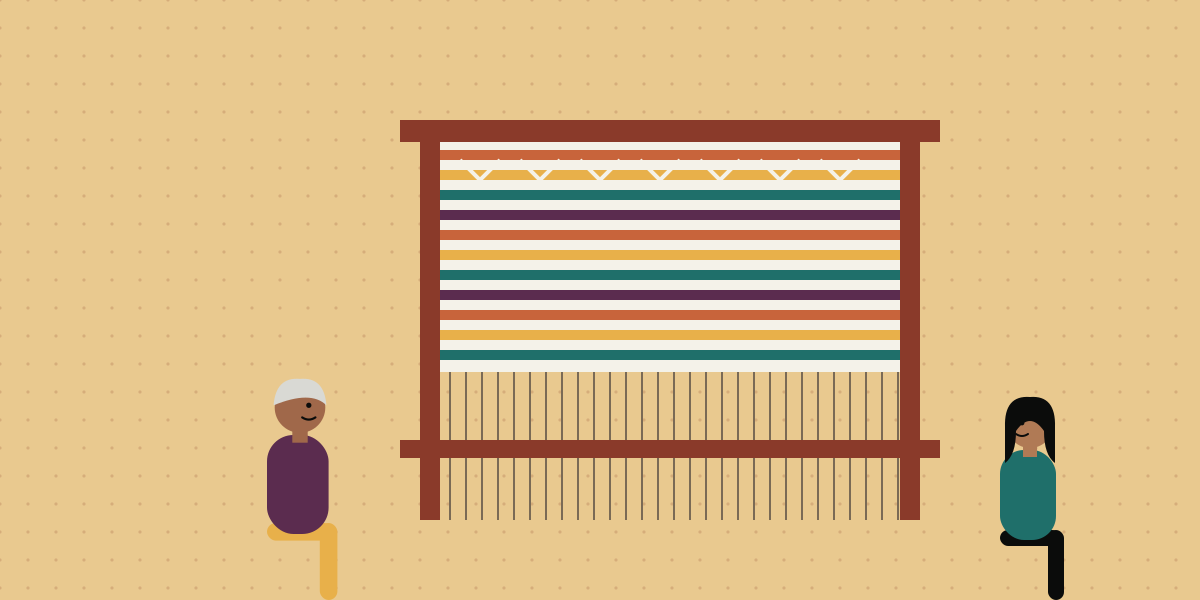
In the corner of the courtyard stood a wooden loom older than anyone in the family. For most of Anjali's life it had been something to walk around. One summer, it became the most important teacher she ever had.
This is a short story written by Breitordo. The characters, places and events in it are fictional, though the experiences it describes are familiar to many people.
Home for the holidays
Anjali came home in May with a laptop full of fashion sketches and a head full of words like silhouette, mood board and colour story. She was in her second year of a textile design course in the city, and she had begun to think of her small weaving village as a place she had left behind.
Her grandmother, Kamla Devi, was seventy-four. She still sat at the family loom most mornings, her hands moving with a calm rhythm that seemed to have nothing to do with thinking. Shuttle across, beater forward, foot on the pedal. Shuttle back. The sound of it had been the background music of Anjali's childhood, like the call of the koel or the hum of the pressure cooker.
On her third day home, Anjali showed her grandmother some designs on her laptop. Kamla Devi looked at them with polite interest, then asked a question that stayed with Anjali for weeks. "Who will weave this?"
The pattern nobody remembered
Later that week, while looking for an old photograph, Anjali found a folded piece of cloth at the bottom of a steel trunk. It was a dupatta, faded to the colour of weak tea, with a border of small repeating motifs: tiny birds facing each other, separated by a shape that looked like a seed or a flame.
"Who made this?" she asked.
"My mother," said Kamla Devi. "For my wedding." She touched the border. "We called it the parrot border. Nobody weaves it now. It is slow. The traders say people want plain borders. Cheaper."
Anjali had studied textile history in college. She had seen motifs from museums and books. But she had never seen this one, and when she searched online that night, she found nothing like it. A pattern that had been woven in her own family for at least three generations existed, as far as she could tell, only in this one faded piece of cloth.
"Can you still weave it?" she asked.
Her grandmother laughed. "My eyes are not what they were. But my hands remember. If you can be my eyes, my hands can teach you."
Six weeks at the loom
It was much harder than Anjali expected. In college she had learned weaving on small frame looms, with clear diagrams and patient instructors. Her grandmother's loom was large, unforgiving and full of habits that had never been written down.
The parrot border required a special way of lifting threads that Kamla Devi described not in technical terms but in rhythms and counts. "Three, then two, then the small lift, then hold," she would say, tapping the wooden frame. Anjali started recording the sequences in a notebook, drawing grids to translate her grandmother's spoken counts into a pattern chart.
For the first two weeks, nothing worked. The birds came out crooked. The threads broke. Anjali's back ached and her fingers blistered. Twice she wanted to give up. Each time, her grandmother said the same thing: "Your hands are learning even when the cloth is wrong."
By the fourth week, the first recognisable parrot appeared. Then another. By the sixth week, Anjali had woven a full metre of border, slightly uneven but unmistakably alive. Kamla Devi held it up to the light, ran her thumb over the birds and said nothing for a long time. Then she said, quietly, "My mother would have laughed at your mistakes. And then she would have been very happy."
The festival
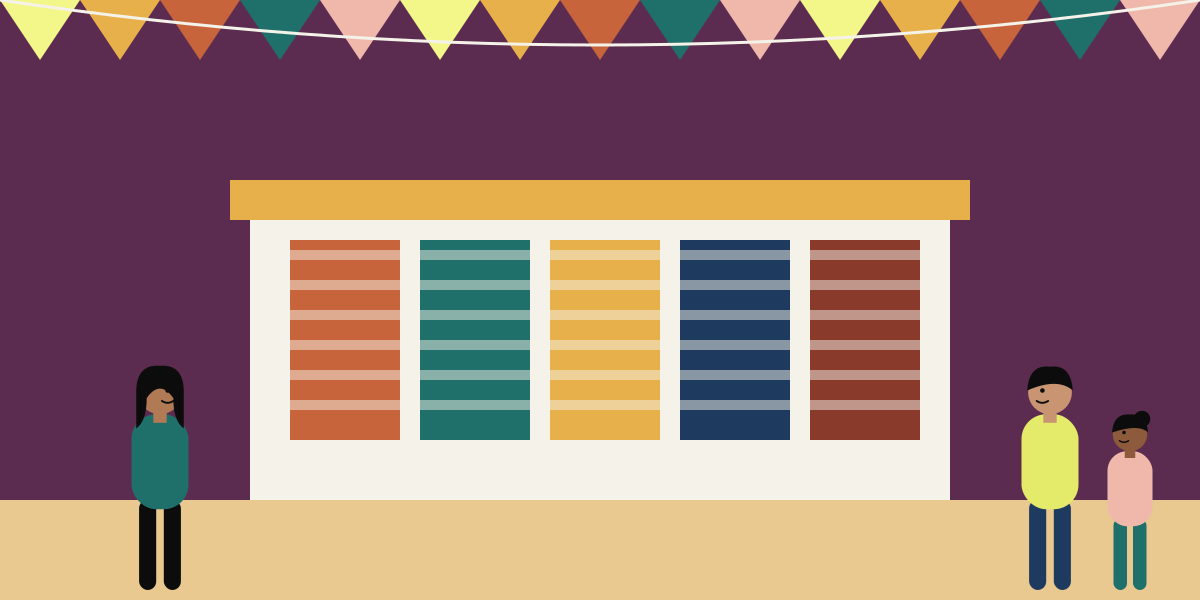
That winter, the district held its annual crafts festival. Anjali persuaded her family to take a small stall. She wove three dupattas with the parrot border in new colours: indigo, saffron and a deep forest green. Next to them, she hung the faded original from the trunk, with a hand-written card explaining its story.
She had expected people to look at the new pieces. Instead, almost everyone stopped at the old one first. They read the card. They asked questions. An older woman from a neighbouring district said her own grandmother had woven something similar and began to cry a little. A design student from the city asked if she could photograph the pattern chart. A small boutique owner asked whether the family could weave twenty pieces before spring.
All three new dupattas sold on the first day. But what Anjali remembered most was her grandmother, sitting on a plastic chair at the back of the stall, explaining the parrot border to a group of schoolchildren with the same rhythm she used at the loom. Three, then two, then the small lift, then hold.
What Anjali learned
Anjali went back to college in a different frame of mind. Her final-year project became a documentation of disappearing border patterns in her region, created with the help of older weavers. She learned to treat their knowledge not as raw material for her own designs but as expertise to be credited, respected and paid for.
She also learned something about herself. The design vocabulary from her course was useful, but it was incomplete. Her grandmother had never used the word silhouette in her life, yet she understood structure, colour and rhythm more deeply than any textbook Anjali had read.
The conversation that changed her project
In the spring, Anjali's professor asked each student to present a proposal for their final-year project. Anjali had planned to design a collection of modern kurtas. Instead, she stood in front of the class with a photograph of the faded dupatta from the trunk and her grandmother's hand-drawn counts translated into pattern grids.
Some classmates looked puzzled. One asked whether old village patterns were really "design" at all. The professor answered before Anjali could. "Everything we study began somewhere like this," she said. "The question is whether we learn from it with respect, or simply take it."
That sentence shaped Anjali's project. She decided that every pattern she documented would carry the name of the weaver or family who shared it, and that any commercial use would involve fair payment to them. It made the work slower and more complicated. It also made it honest.
Why traditional crafts need younger hands
Across many regions, handloom and craft traditions face similar challenges: slow production, low prices, and fewer young people choosing to learn. Every time an older artisan stops working without passing on their skills, patterns and techniques can disappear quietly.
Stories like Anjali's show one way forward: younger people learning directly from older practitioners, documenting what they know, and finding new audiences through festivals, fairs and thoughtful design. Visitors can help too, by buying directly from makers and paying fair prices.
Read more in our article on why cultural festivals matter, and explore cultural events on Breitordo.
Sources
This is an original short story written by Breitordo. It is fiction and does not use text from any other publication.
Frequently asked questions
Is the parrot border a real pattern?
The pattern, the family and the village in this story are fictional. The challenges it describes are faced by many real weaving communities.