Five Kilometres to Forty-Two: A Late Starter's Marathon Story
It began with a staircase. Rekha climbed three floors to her office one morning when the lift was broken, and had to stand on the landing for a full minute before she could speak.
This is a short story written by Breitordo. The characters, places and events in it are fictional, though the experiences it describes are familiar to many people.
The staircase
Rekha Iyer was forty-eight, an accountant at a mid-sized logistics company, a mother of two teenagers and, by her own description, "a person who sits". She sat on the bus to work. She sat at her desk for nine hours. She sat on the sofa in the evening checking homework and replying to messages from her sister.
The morning the office lift broke, she climbed the stairs to the third floor and arrived breathless, with her heart thumping in her ears. A younger colleague asked if she was all right. She said yes, laughed, and went to her desk. But for the rest of the day, she could not stop thinking about it. When had three floors become a mountain?
That evening, she told her daughter she was going to start walking. Her daughter, who was sixteen and kind but honest, said, "Amma, you have said this four times."
Rekha said, "This is the fifth."
Two minutes
She started with walking: twenty minutes around the colony park every morning before work. After a month, walking felt easy, almost boring. A neighbour who ran every morning suggested she try a simple beginner plan: walk for a few minutes, run for one, walk again, and slowly increase the running.
The first time Rekha tried to run for one minute, she managed about forty seconds. Her face burned with embarrassment, even though nobody was watching except a few crows and an old man doing yoga.
But she came back the next day, and the next. One minute became two. Two became five. Four months after the staircase, she ran for twenty minutes without stopping, slowly, with her cheap canvas shoes slapping the path, and then sat on a bench and cried a little, for reasons she could not fully explain.
She had checked with her doctor before increasing her training, and she listened to her body when something hurt. She bought proper running shoes. She learned to warm up, to cool down and to rest. Mostly, she learned that progress was slower and steadier than she expected, and that this was not a bad thing.
The first race
Her neighbour persuaded her to sign up for a local 5 km fun run. Rekha almost did not go. At the start line she was surrounded by college students in matching T-shirts, serious runners with watches that beeped, and families pushing strollers. She felt old and out of place.
Then the race began, and something unexpected happened. Nobody cared how fast she was. Volunteers cheered for everyone. A boy of about ten ran alongside her for a while and told her she was "doing very good, aunty". She finished in thirty-eight minutes, near the back, grinning like a schoolgirl.
At the finish, she was given a small medal on a ribbon. She wore it at dinner that night. Her son rolled his eyes. Her daughter took a photograph and made it her phone wallpaper.
Ten, then twenty-one
Over the next year, Rekha ran a 10 km race, then another. She joined a small running group that met on Sunday mornings: a retired schoolteacher, two software engineers, a nurse who came straight from night shifts, and a college student training for her first half marathon. They ran together, ate idlis together afterwards and talked about everything except work.
The group taught her things no app could. How to pace herself on hills. How to drink water without stopping. How to keep going when the voice in her head said she was too old, too slow, too tired. Mostly, they taught her that every runner had that voice, even the fast ones.
Her first half marathon took her two hours and thirty-one minutes. She was sore for three days and happier than she had been in years.
Forty-two point two
The full marathon was the group's idea. "If you can do twenty-one," said the retired teacher, "you can do forty-two. You just need to be patient." Rekha laughed at them. Then, alone, she looked up training plans late at night, the way people look up holiday destinations they cannot afford.
She trained for six months. There were weeks when work was overwhelming and she missed sessions. There was a knee niggle that needed three weeks of rest and a visit to a physiotherapist. There was a Sunday long run in the rain when she seriously wondered what she was doing with her life.
On race day, she started slowly, as the group had told her. By kilometre twenty-five, her legs felt heavy. By thirty-two, everything hurt. Around thirty-six, she slowed to a walk for a while, and a stranger running past patted her shoulder and said, "Not long now." She started running again.
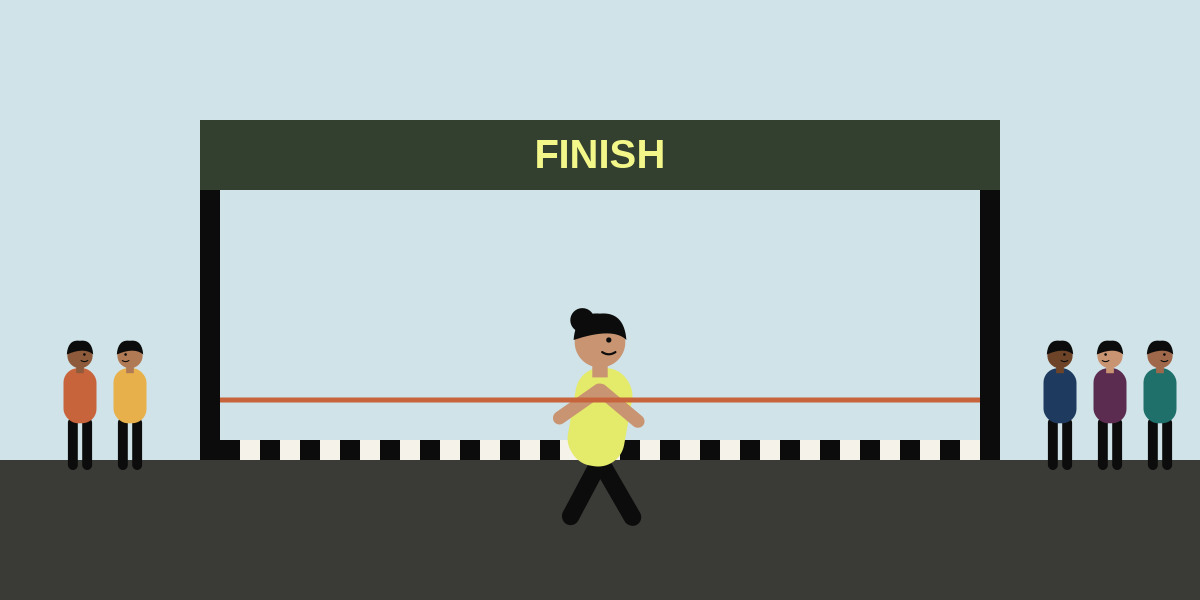
She crossed the finish line in five hours and forty-one minutes. Her children were waiting behind the barrier, holding a hand-made sign that said AMMA WHO SITS with the word SITS crossed out and RUNS written above it.
What changed
Rekha still works as an accountant. She still sits at a desk for most of the day. But she climbs the stairs to the third floor without thinking about it. She sleeps better. She worries less. She has friends she would never have met otherwise. And she has a quiet confidence, born from doing something she once believed was impossible for someone like her.
When people ask her for advice, she says three things. Start smaller than you think. Be patient with your body. And find people to run with, because the miles go faster in good company.
The small habits that made the difference
Looking back, Rekha says the marathon itself was not the hardest part. The hardest part was the ordinary Tuesday mornings when it was dark, the bed was warm and nobody would have known if she stayed home. What helped most were small, almost boring habits: laying out her running clothes the night before, keeping a simple notebook of every run, and arranging to meet a friend so that skipping meant letting someone down.
She also learned to celebrate progress that nobody else could see: the first time she ran up the colony hill without stopping, the first week she ran four times, the first long run that felt easy. These small victories mattered more to her than any medal.
A note on starting later in life
Many people feel it is too late to take up a sport or a physical challenge. Stories like Rekha's are a reminder that steady, gradual progress can take people much further than they imagine. If you are thinking about starting, it is sensible to speak to a doctor first, follow a gentle, gradual plan and listen to your body.
Explore sports events on Breitordo, or read our guide on choosing which events to attend.
Sources
This is an original short story written by Breitordo. It is fiction and does not use text from any other publication.
Frequently asked questions
Is Rekha a real runner?
No. Rekha is a fictional character in a short story by Breitordo. Anyone starting a new exercise routine should consult a doctor and follow a gradual plan.