Forty Stalls and One Good Question
Arjun had read every article about trade fairs he could find. None of them prepared him for the noise, the crowds, or the moment he realised he had been asking the wrong question all along.
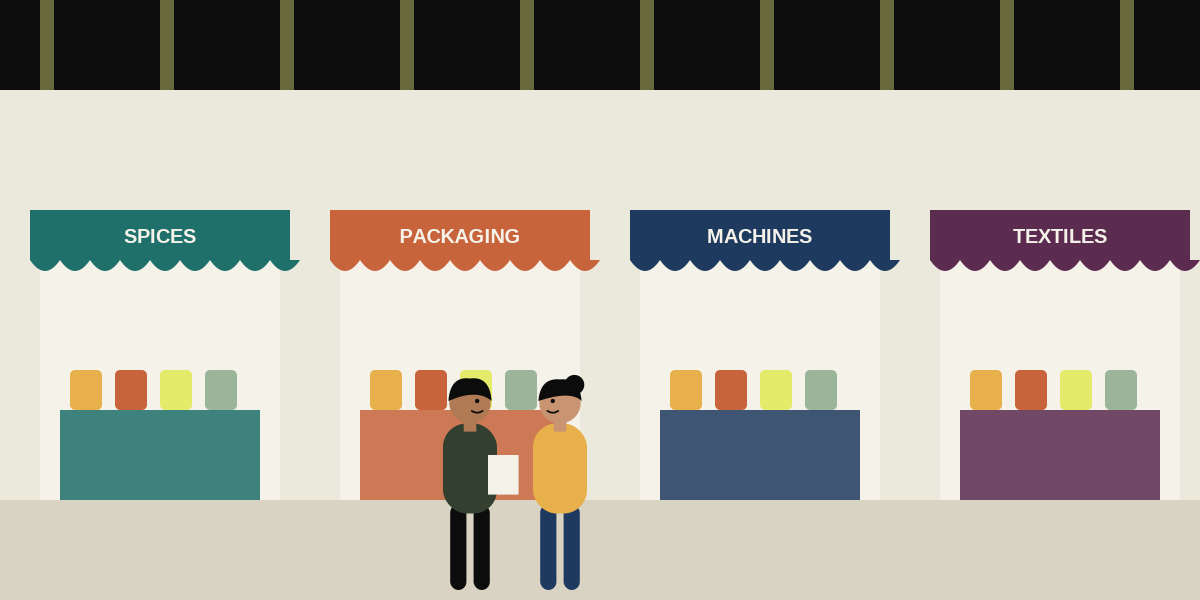
This is a short story written by Breitordo. The characters, places and events in it are fictional, though the experiences it describes are familiar to many people.
Jars, labels and a problem
Arjun Mehra was twenty-six and had been selling his grandmother's lime and mango pickles for almost two years. It had started as a small experiment: twenty jars sold to friends, then fifty to friends of friends, then a small online store that somehow kept growing. Now he was selling about six hundred jars a month from a rented kitchen in the back of a building in Ludhiana.
The pickles were excellent. Everyone said so. The problem was everything else. The glass jars were expensive and sometimes arrived cracked. The labels peeled off in the humidity. Shipping costs ate a large part of every sale. Arjun spent more time solving packaging problems than he did talking to customers.
When a friend mentioned that a large trade fair was coming up in Delhi, with an entire hall of packaging suppliers, Arjun booked a train ticket the same night. He printed fifty visiting cards, packed six sample jars in bubble wrap and wrote one line at the top of a fresh notebook page: Find cheaper jars.
The first morning
The exhibition halls were enormous. Arjun had imagined something like a big market. Instead he found rows upon rows of stalls stretching into the distance, each with bright lights, banners and eager staff holding brochures. Machines hummed. Announcements echoed. Thousands of people moved in every direction at once.
He went to the packaging hall and started at the first stall. "Do you make glass jars?" he asked. They did. "What is your price?" They asked how many he needed. He said six hundred a month. Their faces changed slightly. The minimum order, they explained politely, was twenty thousand.
The second stall said the same. The third did not make jars at all, only plastic containers. By lunchtime, Arjun had visited fourteen stalls, collected a heavy bag of brochures and learned nothing he could use. His feet hurt. He sat on the steps outside the hall with a cup of tea and felt, for the first time, that he did not belong there. Everyone else seemed to be buying in thousands. He was buying in hundreds.
A conversation over tea
An older man sat down on the same step, also holding a paper cup. He had a lanyard that said Exhibitor and the tired, cheerful look of someone on his fifth trade fair of the year. He glanced at Arjun's bag of brochures and smiled.
"First time?"
Arjun nodded and, because the man seemed kind, explained his problem. Six hundred jars a month. Everyone wanted twenty thousand.
The man listened, then asked a question Arjun had not expected. "Why do you want jars?"
"For the pickle," said Arjun, slightly confused.
"No. Why glass jars? Who said your pickle must go in glass? What does your customer actually need?"
Arjun opened his mouth to answer and found he did not have one. Glass jars were simply what pickles came in. His grandmother had used them. Every brand he admired used them. He had never asked whether they were the right choice for a small online business that shipped across the country.
"Don't ask people what they sell," the man said, finishing his tea. "Tell them what problem you have. Then ask them what they would do. You will learn more in ten stalls than you learned in forty."

The afternoon
Arjun went back into the hall with a new line in his notebook. He crossed out Find cheaper jars and wrote: My pickle breaks in transit, my labels peel and my shipping is expensive. What would you do?
The conversations changed immediately. At one stall, a packaging engineer suggested a food-grade pouch with a resealable top that was lighter, did not break and cost much less to ship. At another, a label printer explained that his labels peeled because they were the wrong material for humid kitchens, and showed him a waterproof alternative. A third supplier, a small family firm from Gujarat, said they did not make jars but knew a regional glass maker who served small brands with lower minimum orders.
By the end of the day, Arjun had nine pages of notes, five useful contacts and something even more valuable: a clear picture of options he had not known existed. He did not sign any orders. He did not need to. He had what he came for, even if it was not what he had expected.
What happened next
Back in Ludhiana, Arjun ran a small experiment. For one month, he offered customers a choice: the classic glass jar or a new travel pouch at a lower price. To his surprise, more than half chose the pouch. Breakages fell almost to zero. Shipping costs dropped noticeably. He switched to waterproof labels for the jars he still sold, and he introduced a small "gift jar" range in glass for festivals, priced higher and packed more carefully.
Six months later, his monthly sales had nearly doubled. More importantly, he was spending his evenings talking to customers again instead of arguing with courier companies about broken glass.
He never saw the man from the steps again. He did not even learn his name. But at every trade fair Arjun has visited since, he has done the same thing first: he writes down his problem, not his shopping list.
The notebook page Arjun still uses
Arjun has since turned that afternoon's lesson into a simple page he prepares before every business visit, whether it is a trade fair, a supplier meeting or a call with a potential partner. It has four lines:
- My situation: what my business does and how big it is today.
- My problem: the specific thing that is not working.
- What I have tried: so nobody wastes time suggesting it again.
- What a good outcome looks like: lower cost, fewer breakages, faster delivery, or something else.
He says the page does two things. It makes conversations with experts far more useful, and it forces him to think clearly about his own business before asking anyone else to.
It is a small habit, but it has saved him from more than one expensive mistake. Twice, while filling in the page, he realised the problem he wanted to solve was not the real problem at all.
The lesson in the story
Many first-time visitors to exhibitions make the same mistake Arjun made. They arrive with a fixed idea of what they want to buy and judge every conversation against it. Experienced visitors do something different. They describe their situation honestly and let experts suggest solutions. It turns a sales conversation into a problem-solving one, and it often reveals options you would never have found by searching online.
If you are planning to visit an exhibition, read our practical guide on how to get the most out of a trade fair, and browse upcoming business events on Breitordo.
Sources
This is an original short story written by Breitordo. It is fiction and does not use text from any other publication.
Frequently asked questions
Is this story about a real business?
No. Arjun and his business are fictional, created by Breitordo to illustrate a common experience at trade fairs.