Beyond Chatbots: Why AI Agents are the Real Future of Automation
Prompting is becoming a chore. We don't want an AI that just talks; we want an AI that takes the wheel. Welcome to the era of Agentic Workflows.
Let’s be honest: the novelty of ChatGPT has worn off. We’ve all spent hours trying to get the "perfect" prompt, only to end up doing half the work ourselves anyway. It’s exhausting. But as we move through this year, a new player has entered the room. We’re moving away from passive chatbots and toward Autonomous AI Agents.
The difference is simple but massive. A chatbot waits for you to tell it what to do. An AI agent, however, understands the goal and figures out the "how" on its own. It’s the difference between hiring someone to answer phones and hiring a manager to run the office. Many creators are no longer just using AI to write; they’re using it to execute.
What exactly is an 'Agentic Workflow'?
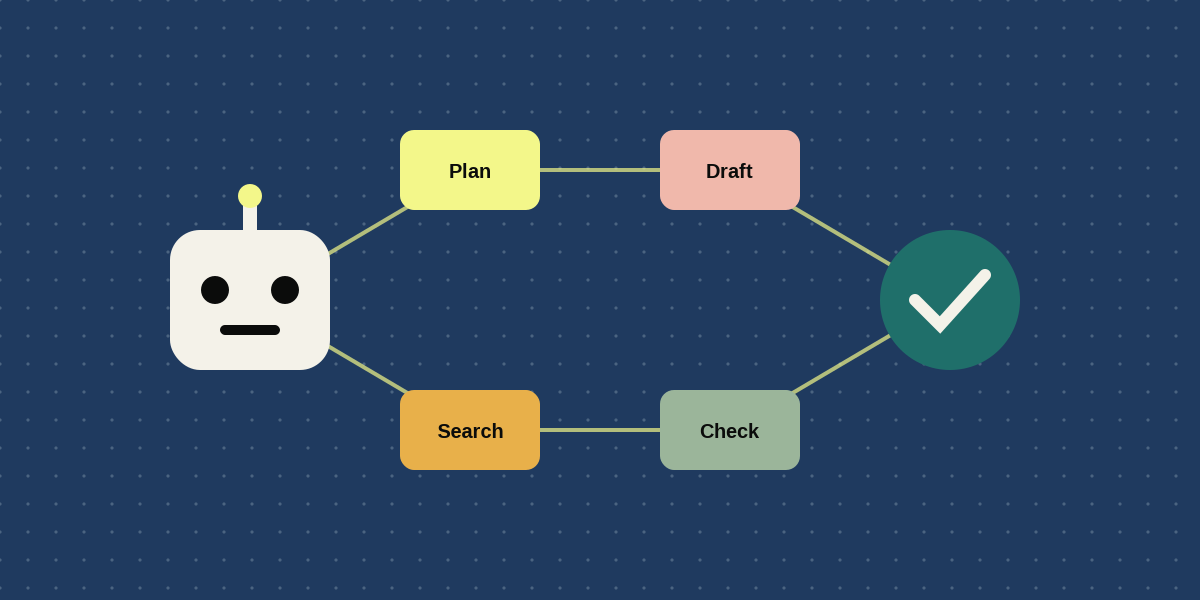
Most AI interactions right now are "one-and-done." You ask a question, it gives an answer. In an Agentic Workflow, the AI works in loops. It writes a piece of code, tests it, finds an error, fixes that error, and repeats the process until the job is actually done.
This "reasoning loop" is where the magic happens. It means you can give a high-level command like, "Build me a landing page for my new dairy app and deploy it," and the agent will handle the HTML, the CSS, the image generation, and the hosting. You aren't a prompter anymore; you’re an orchestrator.
The End of 'Prompt Engineering'?
I’ve always thought "Prompt Engineering" was a bit of a temporary fix. It was a way for us to speak "machine." But AI agents are getting better at speaking "human." They can ask clarifying questions. If your request is vague, they’ll stop and say, "Hey, did you mean X or Y?"
This makes tech more accessible than ever. You don't need to know the specific technical jargon to get things done. This is particularly huge for founders and people working on social impact projects who have great ideas but lack the "coding muscles" to build them from scratch. The barrier to entry isn't just lowering-it's disappearing.
Why This Matters for Disability Inclusion
We’ve talked about accessibility before, but agents take it to another level. Imagine an AI agent that lives on your computer and learns your specific physical needs. If you have motor impairments, the agent can navigate complex software for you. You don't have to struggle with a mouse; you just tell the agent the outcome you want, and it handles the clicks.
It’s about Cognitive Offloading. By letting the AI handle the boring, repetitive parts of a task, we free up our brains for the creative stuff. That’s a win for everyone, but it’s a life-changer for people who find traditional interfaces restrictive.
The Risks: Who’s in Control?
Now, I’m not saying this is all sunshine and rainbows. Giving an AI the power to "do" things comes with risks. What if the agent makes a mistake? What if it deletes the wrong file? This is why we need Human-in-the-Loop systems.
We shouldn't just hand over the keys and go for a nap. The best workflows are collaborative. The AI does the heavy lifting, but the human provides the "Moral Compass" and final approval. A useful rule: AI should be your co-pilot, not your replacement. If you lose the human touch, you lose the soul of the project.
How to Start Building with Agents Today
You don't need to be a senior dev to start using this stuff. Tools like AutoGPT, CrewAI, and even built-in agent features in modern IDEs are already here. Start small. Instead of asking AI to write a blog post, ask it to "Research five trending topics, write a draft for each, and find relevant images." Watch how it handles the multi-step process. It’s eye-opening.
A Simple Example from Everyday Work
Let's make this concrete. Imagine a small events team that receives dozens of enquiries every week. Today, someone reads each email, checks the calendar, looks up pricing, drafts a reply and logs the lead in a spreadsheet. It's useful work, but it's repetitive.
An agentic workflow could handle much of that chain. The agent reads the enquiry, checks availability, drafts a reply using approved pricing and adds the details to the spreadsheet. A human then reviews the draft and clicks send. The person still makes the decision; they just don't have to do the copying and pasting. Across a month, those saved minutes add up to days.
The same pattern works in education. An agent could gather a student's assignment submissions, check them against a rubric for missing sections, and prepare a summary for the teacher. The teacher still marks the work and gives feedback, but spends less time on admin and more on teaching.
Skills That Matter in the Doing Era
If agents take over more routine tasks, what should students and professionals focus on? A few skills stand out.
- Breaking work into steps. Agents work best when a task is clearly defined. The ability to map a process from start to finish is becoming a valuable skill in itself.
- Judgement and review. Someone has to check that the output is accurate, fair and appropriate. Critical thinking matters more, not less.
- Domain knowledge. An agent can draft a contract, a lesson plan or a financial summary, but only someone who understands the subject can tell if it's right.
- Communication. Explaining what you need, to a person or a machine, clearly and precisely, is at the heart of working with AI.
- Ethics and responsibility. Knowing when not to automate, and how to protect privacy and fairness, is just as important as knowing how to automate.
None of these skills are new. They are the same skills that have always made people good at their jobs. What changes is how much they matter when routine work gets faster.
Guidelines for Using Agents Responsibly
Agents can take actions, not just produce text, so a few ground rules help keep things safe.
- Start with low-risk tasks. Drafting, summarising and organising are good first steps. Sending money, deleting records or contacting customers automatically should come much later, if at all.
- Keep a human in the loop for anything that affects people, money or reputation.
- Limit access. Give an agent only the data and tools it needs for the task.
- Keep records. Make sure you can see what the agent did and why, so mistakes can be traced and fixed.
- Protect personal data. Don't feed sensitive information into tools unless you know how it will be stored and used.
If you'd like to build these skills in a structured way, browse courses and certifications on Breitordo.
Conclusion: The Doing Era
The "Talking Era" of AI is over. We are now in the "Doing Era." As agents become more integrated into our browsers and operating systems, the way we work will change forever. It won't be about how fast you can type or how well you can prompt; it will be about how well you can think and lead.
So, stop chatting. Start delegating. The future isn't a better chatbot; it's a team of agents working while you dream. Are you ready to manage them?
Sources
This is an original article written by the Breitordo Editorial Team from general knowledge and practical experience. It does not quote, copy or reproduce material from other publications.