How to Make the Most of an Academic Conference as a Student or Early-Career Researcher
Your first academic conference can feel overwhelming: hundreds of sessions, unfamiliar names and a nagging sense that everyone else knows each other. With a little preparation it becomes one of the most useful experiences of a degree. Here is how to plan for it, present well and come home with more than a certificate of participation.
Why conferences matter in academic life
Journals record finished research. Conferences are where research is still alive: half-finished ideas, early results and arguments that have not yet been settled. Attending lets you hear what experts are working on now, test your own ideas in front of a knowledgeable audience and meet people who may later become collaborators, examiners, employers or supervisors.
For students, conferences also make a field feel human. The authors of papers you have read become people you can ask a question over tea.
Choosing the right conference
- Size: large international meetings have more variety and famous speakers, but smaller national or regional conferences often give students more time and attention.
- Fit: read the themes and past programmes. Your work should match at least one track clearly.
- Reputation: ask your supervisor or senior students which conferences are respected in your field. Be wary of events that accept papers on any topic, promise publication in unknown journals or exist mainly to collect fees.
- Cost and location: registration, travel and accommodation add up quickly. A strong national conference can be better value than a weak international one.
Writing an abstract that gets accepted
An abstract is a short summary, usually 200 to 300 words, of what you will present. Reviewers read many, so clarity wins:
- State the problem and why it matters, in one or two sentences.
- Say what you did: data, methods or approach.
- Give your main finding or argument, with a number or concrete result if possible.
- End with why it matters for the field.
Follow the word limit and format exactly, and ask your supervisor to read it before you submit. If your results are still in progress, say what you expect to present, but do not overpromise.
Funding your trip
Look early for support from your department or university, research funding agencies, professional societies in your field and the conference itself, which may offer student registration rates, volunteer roles in exchange for free registration, or travel grants. Applications often close months before the event, so check as soon as you plan to submit.
Giving a good talk
- One message: decide the single idea you want the audience to remember.
- Fewer slides, bigger text: roughly one slide per minute, with clear figures and little text.
- Rehearse with a timer: running over time is the most common mistake, and chairs will stop you.
- Prepare for questions: list the three hardest questions you might get and think about honest answers. "That's a good point; I haven't tested that yet" is a perfectly professional reply.
Presenting a poster
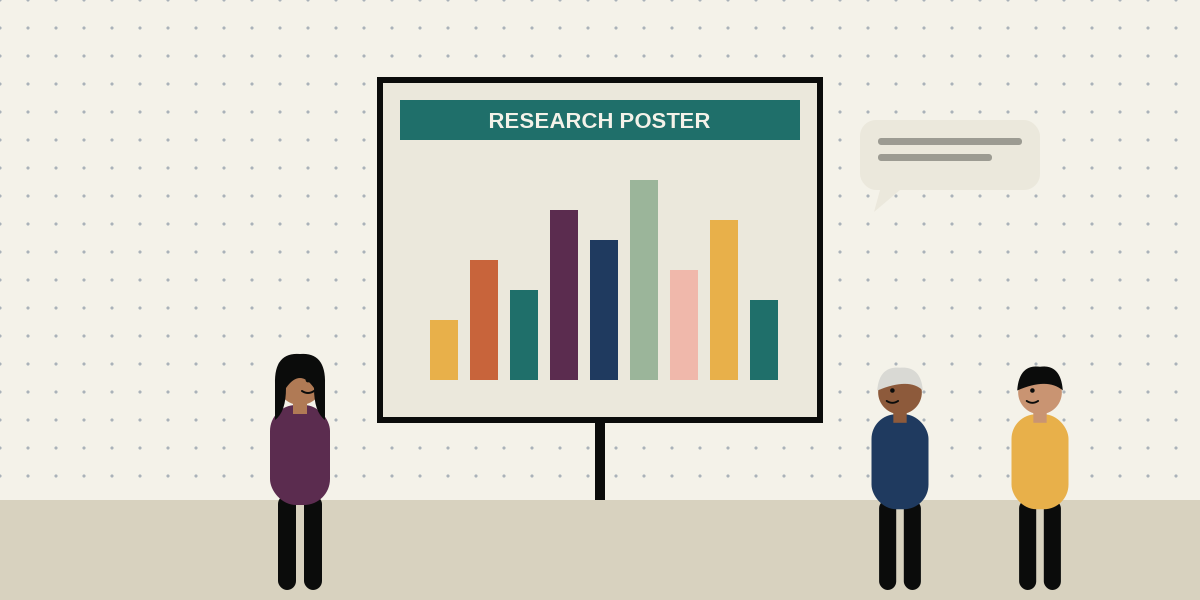
- Use a clear title, a short introduction, a figure that tells the story and a brief conclusion. People should understand the main point in thirty seconds from a few steps away.
- Stand next to your poster during the session and greet people who stop.
- Prepare a one-minute spoken summary and a longer version for interested visitors.
- Bring a QR code or small handout with your contact details and a link to more information.
Meeting people without awkwardness
You do not need to "work the room". A few simple habits make conversations natural:
- Before the event, pick three or four speakers whose work interests you and read one of their recent papers.
- After a talk, ask a specific question or mention a connection to your work. Specific beats flattering.
- At breaks, join small groups at the edges, introduce yourself briefly and ask what people are working on.
- Attend the student or early-career sessions, where everyone is in the same position.
- Keep a short note of who you met and what you discussed.
Getting value from sessions
You cannot attend everything. Choose a mix: sessions directly related to your work, one or two keynotes, and at least one session outside your comfort zone, where unexpected ideas often come from. Take brief notes on ideas you could use, not full transcripts.
After the conference
- Within a week, send short follow-up emails to the people you spoke with, mentioning the conversation.
- Write up your notes: three ideas to try, papers to read and people to follow.
- Share what you learned with your lab or class. It helps them and consolidates your own learning.
- Update your CV with the presentation and any awards.
- If you received useful feedback, act on it while it is fresh.
Online and hybrid conferences
Many conferences now offer online or hybrid participation. Online attendance is cheaper and easier, and recorded sessions mean you can catch talks you would otherwise miss. The trade-off is that informal conversations, which are often the most valuable part, are harder to have. If you attend online, use the chat and question features, join any virtual meet-up sessions and send short messages to speakers whose work interested you. If you present online, test your audio and video beforehand, keep a printed copy of your notes and have a backup plan if your connection fails.
Volunteering at a conference
Many conferences rely on student volunteers to help with registration, session timing and technical support. In return, volunteers often receive free registration and sometimes meals or accommodation. Volunteering is also a natural way to meet organisers and speakers, because you have a reason to talk to them. If funding is tight, write to the organising committee early and ask whether volunteer roles are available.
A simple packing and planning checklist
- Printed and digital copies of your slides or poster, plus a backup on a USB drive.
- Registration confirmation, identity documents and travel bookings.
- A short personal introduction you can say in fifteen seconds.
- A list of sessions you plan to attend and people you hope to meet.
- A notebook or app for notes and contacts.
- A water bottle and something to eat: conference days are long.
If you are shy or attending alone
Many people at conferences feel out of place, including experienced researchers. Arrive early to sessions, when rooms are quieter and it is easier to start a conversation with the person next to you. Prepare one or two simple opening questions, such as asking what brought someone to the session. Coffee queues, poster halls and lunch tables are natural places to talk. If you are travelling with classmates, agree to split up for part of each day so that you meet new people, then compare notes in the evening.
Ethics and etiquette
A few unwritten rules help you make a good impression. Do not photograph or share slides of unpublished work without the presenter's permission. Keep questions short and genuinely about the talk, rather than long statements about your own research. Stay for the whole session when you can; walking out in the middle of a small session is noticeable. If you are presenting work done with others, credit your co-authors and supervisor clearly. Finally, be kind to other students presenting for the first time. Everyone remembers who was supportive at their first conference.
Finding conferences
Ask your department, follow professional societies in your field and check calendars that list academic and higher education events. For higher education professionals as well as students, the higher education events section on Breitordo lists major conferences with dates checked against official sources, and our guide to PhD admission in India explains how conferences fit into research life.
Sources
This is an original article written by the Breitordo Editorial Team from general knowledge and practical experience. It does not quote, copy or reproduce material from other publications.
Frequently asked questions
Can undergraduate students attend academic conferences?
Yes. Many conferences welcome student attendees, offer reduced student fees and have student paper or poster sessions. Ask your teachers which ones suit your level.
What is the difference between a poster and an oral presentation?
An oral presentation is a timed talk, usually 10 to 20 minutes with questions. A poster is displayed in a shared hall where you discuss your work one-to-one with visitors, which is often better for detailed feedback.
How do I avoid fake or predatory conferences?
Check who organises it, whether known researchers are on the committee, whether past proceedings are credible and whether the call for papers covers suspiciously many unrelated fields. Ask your supervisor before paying any fee.
Where can I find travel funding for conferences?
Your own institution, research funding agencies, professional societies and the conference itself often offer travel grants or fee waivers for students. Apply well before the deadline.