Online Degree vs Regular Degree in India: Is an Online Degree Valid, and Is It Right for You?
Online degrees have moved from the margins to the mainstream in India, with many well-known universities now offering online BBA, BCom, MBA, MCA and MA programmes. The obvious question is whether such a degree carries the same weight as one earned on campus. The short answer is that the law treats them equally, but the experience is very different.

Three modes, not two
It helps to separate three ways of studying for a degree in India:
- Regular or conventional mode: you attend classes on campus, usually full-time.
- Open and Distance Learning (ODL): you study mainly from printed or digital material, with occasional contact sessions at study centres and exams at designated centres. Open universities such as IGNOU have used this model for decades.
- Online mode: teaching, learning material, interaction and usually assessment happen through an online platform run by the university.
ODL and online programmes are both regulated by the University Grants Commission through its Distance Education Bureau.
What the UGC says about validity
Regulation 22 of the UGC (Open and Distance Learning Programmes and Online Programmes) Regulations, 2020 deals with equivalence. In plain terms, it says that undergraduate and postgraduate degrees and postgraduate diplomas awarded through ODL or online mode by institutions recognised under these regulations, and in line with the UGC's specification of degrees, are to be treated as equivalent to the corresponding awards through the conventional mode. The UGC repeated this in a public notice in September 2022 to remove confusion among students and employers.
The key words are "recognised under these regulations". Equivalence applies only when the institution and the specific programme are approved for that mode in that academic year.
How to verify an online programme
- Visit the UGC-DEB website and open the list of institutions and programmes approved for the current academic year in ODL and online mode.
- Check that the exact programme name appears, not just the university.
- Check that the duration, eligibility and degree name match the UGC's specification of degrees. A "one-year MBA" in online mode, for example, would be a warning sign.
- Read the UGC's public notices for any institutions placed in a "no admission" category or barred from offering such programmes.
- Be cautious of franchise arrangements where a third party claims to award a university's degree. The regulations require the programme to be owned and delivered by the institution itself.
An honest comparison
| Factor | Regular degree | Online degree |
|---|---|---|
| Legal validity | Valid if the university and programme are recognised | Equivalent if the programme is approved for online mode |
| Cost | Tuition plus living costs, often the larger share | Usually lower total cost; no relocation |
| Flexibility | Fixed timetable | Study around work or family, with deadlines |
| Learning experience | Face-to-face teaching, labs, peer learning | Recorded and live sessions, forums, self-discipline needed |
| Campus life and contacts | Clubs, events, friendships, alumni | Limited, depends on the programme's community efforts |
| Placements | Campus placement drives at many institutions | Career services vary widely; often no campus placement |
| Best suited to | Students straight out of school or college | Working adults, career changers, those who cannot relocate |
When an online degree makes sense
- You are working and want a formal qualification for promotion or a role change.
- You live far from a good university or have family responsibilities that make relocation impossible.
- You need a degree to meet an eligibility requirement and already have practical experience.
- You are disciplined about studying alone and can protect a few hours a week consistently.
When a regular degree is probably better
- You have just finished Class 12 and want the full experience of college: teachers, peers, internships and campus activities.
- Your field depends on labs, studios, clinical work or hands-on practice.
- You are relying on campus placements for your first job.
- You find it hard to study without a timetable and people around you.
Making an online degree count
Employers often look beyond the mode of study to what you can show. If you choose an online programme, take projects seriously, build a small portfolio, join live sessions rather than only watching recordings, and use any alumni groups or events the university offers. Attending relevant workshops, conferences and industry events in person can make up for some of what campus life provides.
What a good online programme looks like
Online programmes vary enormously in quality, even among approved ones. Before enrolling, ask to see a sample module or recorded class. Look for these signs of a programme that takes teaching seriously:
- Live interaction: regular live classes or tutorials where you can ask questions, not only recorded videos.
- Named teachers: faculty members you can identify and contact, with clear response times.
- Meaningful assessment: assignments, projects and proctored exams that test understanding, not just multiple-choice quizzes.
- Student support: technical help, academic counselling, a functioning learner support centre and access to digital library resources.
- Peer community: discussion forums, group projects or cohort activities that let you learn with others.
- Transparent fees: the full fee, examination charges and refund rules in writing before you pay.
Questions to ask before you pay
- Is this exact programme listed on the UGC-DEB website for the current academic year?
- Who awards the degree, and will the certificate mention the mode of study?
- How and where are exams conducted?
- Will my credits be recorded in the Academic Bank of Credits?
- What career support do online learners actually receive?
- Is the person selling the course employed by the university, or by a third party paid on commission?
A university that is confident in its programme will answer these questions plainly. Vague answers or pressure to pay quickly are reasons to slow down.
What employers tend to look at
Employers generally care first that a degree is genuine and relevant. For many roles, they then look at experience, skills and how well candidates can explain their work. An online degree combined with steady work experience can be a strong profile, particularly for mid-career professionals. For entry-level roles, students who studied online may need to work harder to show practical ability through projects, internships or certifications.
Distance learning versus online learning
People often use "distance" and "online" as if they meant the same thing, but the experience differs. Traditional open and distance learning relies mainly on self-study material, with occasional contact classes at study centres and examinations at designated centres. It suits learners who are comfortable studying alone from books and who value low fees and flexibility above interaction. Online programmes deliver teaching through a digital platform, typically with recorded lectures, live sessions, discussion forums and online assessment. They usually cost more than distance programmes but offer more contact with teachers and classmates. Both can lead to valid degrees when the programme is approved; the right choice depends on how you learn best and how much structure you need.
Whichever mode you choose, plan your week as if you were attending classes. Block fixed study hours, set small weekly targets and tell family or colleagues when you are studying. Most people who drop out of flexible programmes do so not because the material is too hard, but because study time slowly disappears under everything else.
A note on credits
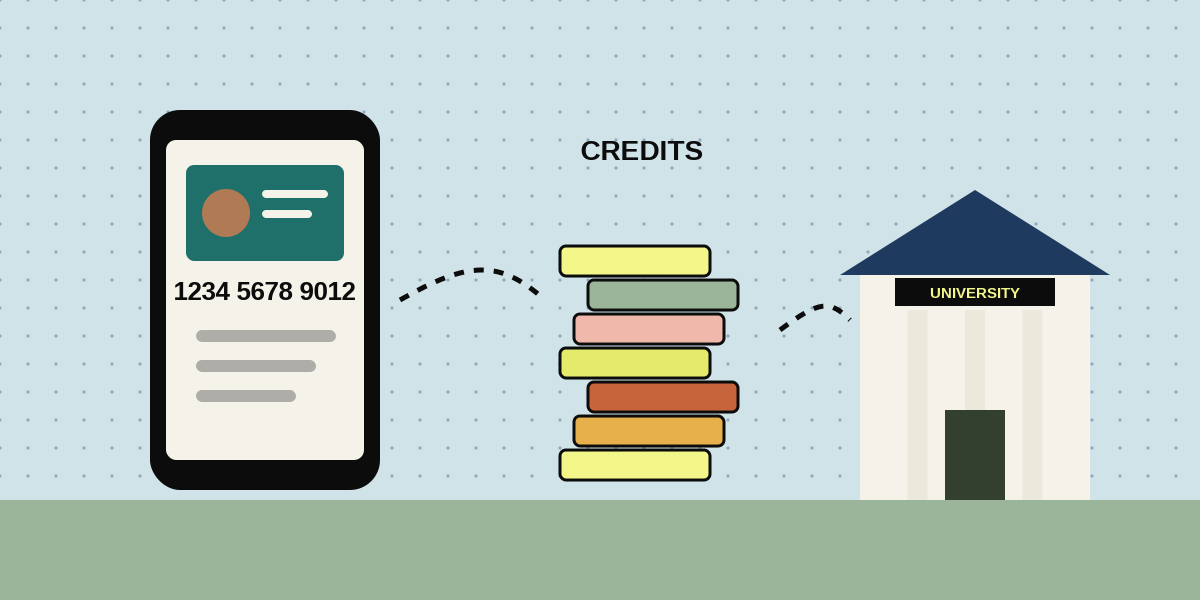
Credits from approved programmes are recorded in the Academic Bank of Credits. Our explainer on the Academic Bank of Credits and APAAR ID covers how that works, and our guide to degrees and levels places online learning in the wider picture.
Sources
Facts, figures and quoted rules in this article come from the sources below. The wording of the article is our own.
- UGC (Open and Distance Learning Programmes and Online Programmes) Regulations, 2020, University Grants Commission, 2020
- UGC Distance Education Bureau - approved institutions and programmes, UGC-DEB
- Online, ODL degrees equivalent to those obtained by conventional mode: UGC, Careers360, 2022. Report on the UGC public notice of September 2022.
- Lok Sabha unstarred question on equivalence of online degrees, Parliament of India Digital Library
Frequently asked questions
Is an online degree from a UGC-recognised university valid?
Yes, if the specific programme is approved by the UGC for online or distance delivery. The UGC's 2020 regulations state that such degrees are equivalent to the corresponding degrees offered through the conventional mode.
How do I check if an online programme is approved?
Look up the institution and programme on the UGC Distance Education Bureau (DEB) website for the relevant academic year, and check that the university is not on any "no admission" list.
Can I get a government job with an online degree?
A valid degree from an approved online or ODL programme is generally accepted, but some recruitments and professional councils have their own rules. Always read the eligibility section of the specific notification.
Are online engineering or medical degrees allowed?
No. Programmes that need extensive practical or clinical training, such as engineering, medicine and several other professional degrees, are not permitted in online or distance mode under the regulations.