Kingdoms
The Chola Dynasty: Temples, Bronzes and a Great Maritime Power of South India
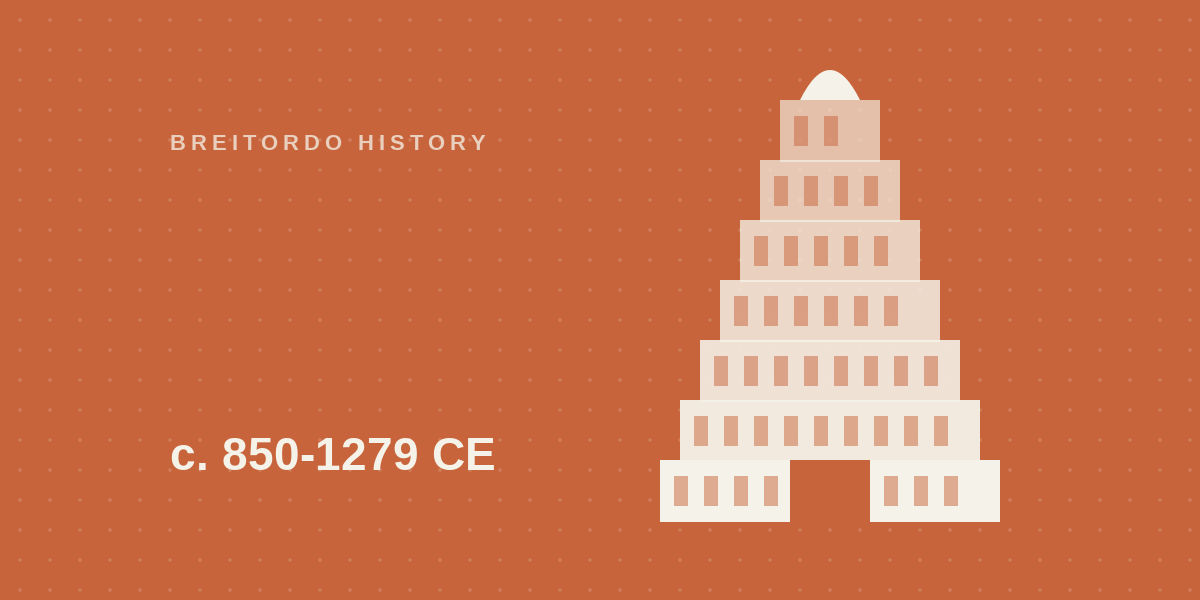
The Cholas were one of the longest-ruling dynasties of South India. The imperial Chola state, revived by Vijayalaya around 850 CE, reached its height under Rajaraja I (985-1014) and his son Rajendra I (1014-1044). From their heartland in the Kaveri delta, the Cholas controlled much of South India, parts of Sri Lanka and the Maldives, and launched naval expeditions to Southeast Asia. They are famous for magnificent temples such as the Brihadisvara temple at Thanjavur, exquisite bronze sculptures and a well-developed system of village self-government.
Quick facts
- Imperial period
- c. 850-1279 CE
- Heartland
- Kaveri river delta in present-day Tamil Nadu
- Capitals
- Thanjavur, later Gangaikonda Cholapuram
- Greatest rulers
- Rajaraja I (985-1014), Rajendra I (1014-1044)
- Famous monuments
- Brihadisvara temple (Thanjavur), Gangaikonda Cholapuram, Airavatesvara temple (Darasuram)
- Known for
- Temple architecture, bronze sculpture, village assemblies, naval power, Tamil literature
Introduction
When people imagine medieval India, they often picture the kingdoms of the north. Yet some of the most impressive achievements of the period took place in the far south, in the fertile delta of the Kaveri river. Here, the Chola dynasty built a powerful state that ruled for more than four centuries in its imperial phase.
The Cholas were great builders, patrons of art and literature, efficient administrators and, unusually for Indian rulers, a significant naval power. Their temples still dominate the skyline of towns in Tamil Nadu, and their bronze sculptures are treasured in museums around the world. Their influence reached across the sea to Sri Lanka, the Maldives and Southeast Asia.
Early Cholas and the Sangam age
The name Chola is very old. It appears in Ashoka's inscriptions in the third century BCE, which mention the Cholas as neighbours beyond his empire. Early Tamil poems from the Sangam period, composed roughly in the early centuries CE, describe Chola kings ruling from places such as Uraiyur and the port of Puhar (Kaveripattinam).
One of the most celebrated early rulers was Karikala, remembered in tradition for his military victories and for building embankments along the Kaveri to control floods and support agriculture. Many details of these early rulers are mixed with legend.
After the Sangam age, the Cholas faded into the background for several centuries while other dynasties, such as the Pallavas of Kanchipuram and the Pandyas of Madurai, dominated the south.
The revival under Vijayalaya
Around 850 CE, a chief named Vijayalaya captured Thanjavur and established the line that historians call the imperial or later Cholas. His successors, especially Aditya I and Parantaka I, expanded their territory by defeating the Pallavas and fighting the Pandyas.
The Cholas faced serious setbacks too. In 949 CE, the Rashtrakutas of the Deccan defeated them at the Battle of Takkolam, and for some years Chola power was weakened. It was only in the late tenth century that the dynasty recovered fully and entered its most glorious phase.
Rajaraja I: building an empire
Rajaraja I came to the throne in 985 CE and transformed the Chola kingdom into an empire. He defeated the Cheras and Pandyas in the south, took control of northern Sri Lanka, and fought against the Western Chalukyas in the Deccan. Towards the end of his reign, his forces also took the Maldive islands.
Rajaraja was not only a conqueror but also an organiser. He began a careful land survey for revenue purposes and improved the administration. He also started the practice of beginning royal inscriptions with a historical introduction, called a meykirtti, listing the king's achievements. These inscriptions are valuable sources for historians.
His greatest monument is the Brihadisvara temple in Thanjavur, also called the Rajarajeshwaram, completed around 1010 CE. Dedicated to Shiva, it has a towering vimana (tower over the sanctum) about 66 metres high, topped by a massive capstone. The temple walls carry long inscriptions listing donations, staff and the many people who worked in and around it, giving us a remarkable view of temple life.
Rajendra I: the Ganga and the sea
Rajaraja's son Rajendra I ruled from 1014 to 1044 and took Chola power even further. He completed the conquest of Sri Lanka and continued campaigns in the Deccan.
Around 1019-1020, his army marched north through Odisha to the banks of the Ganga in Bengal. To celebrate, Rajendra took the title Gangaikondachola, "the Chola who took the Ganga", and built a new capital called Gangaikonda Cholapuram, with a magnificent temple and a large reservoir. According to Chola inscriptions, water from the Ganga was brought back and poured into the reservoir as a symbol of victory.
Rajendra's most famous campaign was overseas. Around 1025, a Chola naval expedition attacked several ports of the Srivijaya kingdom, which controlled the important sea routes through the Strait of Malacca in present-day Indonesia and Malaysia. Historians debate the purpose of this expedition. It may have been intended to protect Chola trading interests and secure the sea route to China, rather than to conquer territory permanently.
Administration and village self-government
The Chola state was organised into provinces called mandalams, which were divided into valanadus and nadus, and finally into villages. The king was at the centre, supported by officials, but local institutions played a very important role.
Chola inscriptions provide detailed information about village assemblies. In villages of Brahmin landholders, called brahmadeyas, the assembly was known as the sabha. In other villages, the assembly was called the ur. Merchant groups had their own organisations, such as the nagaram.
Inscriptions from Uttaramerur, near Kanchipuram, dating from the reign of Parantaka I, describe how members of the village sabha's committees were chosen. Names of eligible candidates were written on palm leaves, placed in a pot, and drawn by a young boy, a method sometimes called the kudavolai system. The inscriptions also set qualifications for members, such as owning land, having a house and having knowledge of certain texts, and rules disqualifying people who had committed offences or failed to submit accounts.
These committees managed tasks such as irrigation tanks, gardens, temples and justice. While this was not democracy in the modern sense, since many people were excluded, it shows a sophisticated tradition of local self-government.
Economy, irrigation and trade
The Chola heartland in the Kaveri delta was one of the most productive agricultural regions in India. Rice was the main crop, supported by an extensive network of canals and irrigation tanks. Land grants to temples and Brahmins encouraged the spread of agriculture into new areas.
Trade was equally important. Chola ports such as Nagapattinam were linked to markets in Sri Lanka, Southeast Asia and China, as well as to the Arab world. Powerful merchant guilds, such as the Ainnurruvar (often translated as "the Five Hundred"), operated across South India and overseas. The Cholas sent embassies to the Song court of China, showing their interest in maritime commerce.
Temples were economic centres as well as religious ones. They owned land, employed priests, musicians, dancers, cooks, gardeners and craftsmen, lent money and stored valuables. A large temple like the Brihadisvara functioned almost like a small town.
Art, bronzes and literature
Chola art is world famous, especially its bronze sculptures. Using the lost-wax method, Chola artisans created images of gods and saints with astonishing grace and detail. The most celebrated form is Nataraja, Shiva as the Lord of Dance, surrounded by a ring of flames, one foot raised and the other resting on a small figure representing ignorance. These bronzes were carried in processions during festivals.
Temple architecture reached new heights. Apart from the temples at Thanjavur and Gangaikonda Cholapuram, the Airavatesvara temple at Darasuram, built in the twelfth century, is known for its fine sculpture. Together, these three temples are inscribed on the UNESCO World Heritage List as the Great Living Chola Temples, because worship continues in them to this day.
Tamil literature and devotion flourished. The hymns of the Shaiva saints, the Nayanars, were collected into the Tirumurai, and the twelfth-century poet Sekkizhar wrote the Periya Puranam, telling the lives of these saints. The poet Kamban composed the Tamil Ramavataram, widely known as the Kamba Ramayanam, around this period.
Life in Chola society
Chola inscriptions, which number in the thousands, give us an unusually detailed view of ordinary life. They record gifts to temples, sales of land, arrangements for lamps to be kept burning, the wages of temple staff and the duties of villagers. Through them we meet farmers, shepherds, weavers, oil-pressers, goldsmiths, merchants, musicians and dancers.
A common type of donation was the gift of sheep or cattle to a temple, with shepherds agreeing to supply a fixed amount of ghee every day to keep a lamp burning before the deity. Such arrangements connected the temple to the wider village economy and show how religion, livelihood and community were bound together.
Society was hierarchical. Landowning groups, especially Brahmins and the dominant agricultural communities known as the Vellalas, held much of the power, while many labourers and lower-status groups had far fewer rights. Some inscriptions mention people who were bound to temples or landowners. Historians use these records to understand both the prosperity and the inequalities of Chola society.
Women appear in inscriptions as donors, temple dancers, queens and landholders. Chola queens such as Sembiyan Mahadevi, a great patron of temple building in the tenth century, played important roles in religious and cultural life.
The Chola navy and the Indian Ocean world
The Cholas are often described as one of the few Indian dynasties to use naval power on a large scale. Their ships carried armies to Sri Lanka and the Maldives and across the Bay of Bengal to Southeast Asia. This reflected the importance of the sea routes connecting India with the rest of Asia.
In the eleventh century, the Indian Ocean was a busy world of trade. Ships carried cotton textiles, pepper, precious stones, aromatic woods, horses and porcelain between ports in Arabia, India, Sri Lanka, Southeast Asia and China. Whoever controlled key ports and straits could profit from this trade.
Tamil merchant inscriptions have been found far from India, including in Sumatra and Thailand, showing the reach of South Indian traders. The Chola state's interest in the sea was closely linked to these commercial networks. Today, the Chola expeditions are remembered as an early example of India's long maritime connections with Southeast Asia.
Later Cholas and decline
After Rajendra I, the Cholas continued to be a major power, but they faced constant wars with the Western Chalukyas in the Deccan. In 1070, Kulottunga I, who was connected to both the Chola family and the Eastern Chalukyas of Vengi, came to the throne, uniting the two lines. His reign was long and relatively stable, and he is remembered for reducing some taxes.
In the twelfth and thirteenth centuries, Chola power gradually declined. Feudatories became more independent, and rival powers such as the Hoysalas and the revived Pandyas grew stronger. By 1279, the Pandyas had overcome the last Chola ruler, Rajendra III, and the dynasty came to an end.
Legacy
The Cholas left behind a legacy that is still visible and alive. Their temples remain places of worship and pride. Their bronzes are among the greatest achievements of world art. Their inscriptions preserve a detailed record of how villages, temples and states were organised a thousand years ago.
Their maritime activities remind us that India's history has always been connected to the sea and to the wider world of the Indian Ocean. For students, the Chola story shows how agriculture, trade, religion, art and government were woven together to create a remarkable civilization in the south.
Important personalities
Vijayalaya
Founder of the imperial Cholas, c. 850 CECaptured Thanjavur and established the dynasty's revival.
Rajaraja I
Ruled 985-1014Expanded the empire and built the Brihadisvara temple at Thanjavur.
Rajendra I
Ruled 1014-1044Led campaigns to the Ganga and an overseas expedition against Srivijaya; built Gangaikonda Cholapuram.
Kulottunga I
Ruled 1070-1122United the Chola and Eastern Chalukya lines and ruled for a long, relatively stable period.
Kamban
PoetComposed the Tamil Ramayana, the Ramavataram.
Important battles
Battle of Takkolam
949The Rashtrakutas defeat the Cholas, temporarily weakening them.
Conquest of Sri Lanka
c. 993-1017Rajaraja I and Rajendra I bring much of the island under Chola control.
Expedition to the Ganga
c. 1019-1020Rajendra I's army marches to Bengal.
Expedition against Srivijaya
c. 1025A Chola naval force attacks ports in Southeast Asia.
Timeline
- 3rd century BCE
The Cholas are mentioned in Ashoka's inscriptions.
- c. 850 CE
Vijayalaya captures Thanjavur.
- 949
Battle of Takkolam.
- 985
Rajaraja I becomes king.
- c. 1010
Brihadisvara temple at Thanjavur completed.
- 1014
Rajendra I becomes king.
- c. 1019-1020
Campaign to the Ganga.
- c. 1025
Naval expedition to Srivijaya.
- 1070
Kulottunga I comes to the throne.
- 1279
End of the Chola dynasty.
- 1987
Brihadisvara temple inscribed on the UNESCO World Heritage List (extended in 2004).
Historical sources and further reading
This article summarises widely accepted historical accounts. For deeper study, see:
- The Colas-K. A. Nilakanta Sastri, University of Madras, 1935 (revised 1955).
- A History of South India-K. A. Nilakanta Sastri, Oxford University Press, 1955.
- Nagapattinam to Suvarnadwipa: Reflections on the Chola Naval Expeditions to Southeast Asia-Hermann Kulke, K. Kesavapany and Vijay Sakhuja (eds), Institute of Southeast Asian Studies, 2009.
- Early India: From the Origins to AD 1300-Romila Thapar, Penguin, 2002.
- Chola dynasty, Encyclopaedia Britannica (online reference).
Frequently asked questions
Who built the Brihadisvara temple?
Rajaraja I, the Chola king, completed it at Thanjavur around 1010 CE.
What was the Uttaramerur inscription?
A set of Chola-period inscriptions describing how members of a village assembly's committees were selected and what qualifications they needed.
Did the Cholas have a navy?
Yes. The Cholas used naval power to campaign in Sri Lanka and the Maldives and to attack ports of the Srivijaya kingdom in Southeast Asia around 1025.
What are the Great Living Chola Temples?
A UNESCO World Heritage Site made up of the Brihadisvara temples at Thanjavur and Gangaikonda Cholapuram and the Airavatesvara temple at Darasuram.