History of Education
From Ancient Universities to Online Learning: How Education Became Global
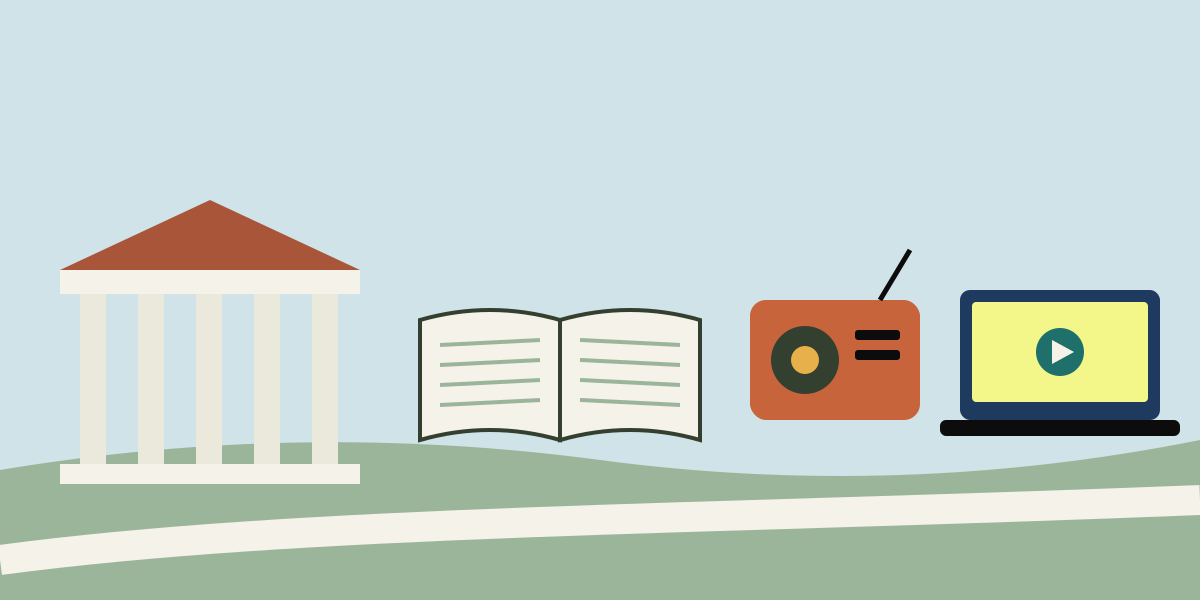
Organised higher learning has existed for well over two thousand years. Early centres such as Takshashila and Nalanda in South Asia, the Academy of Athens, the Mouseion of Alexandria and China's Imperial Academy gathered teachers and students in one place. Medieval institutions such as al-Qarawiyyin in Fez, al-Azhar in Cairo and the universities of Bologna, Paris and Oxford created lasting models of study and degrees. In the nineteenth century the research university spread worldwide, alongside mass schooling. Distance learning followed the technologies of each age: correspondence courses by post from the 1840s, radio and television schools in the twentieth century, open universities from the 1970s, and the internet, open courseware and MOOCs from the 2000s. Today, micro-credentials and AI-assisted learning are the newest chapters in a long history of making education reach more people.
Quick facts
- Ancient centres
- Takshashila, Nalanda, the Academy of Athens, Alexandria, the Han Imperial Academy
- Medieval institutions
- al-Qarawiyyin (founded 859), al-Azhar (founded 970-972), Bologna (traditionally 1088), Paris, Oxford
- Modern model
- The research university, associated with the University of Berlin (1810)
- Distance learning
- Correspondence (1840s), University of London external degrees (1858), Open University UK (1969)
- Online era
- MIT OpenCourseWare (2001), Khan Academy (2008), MOOCs (2008 onwards; 2012 boom)
- Newest trends
- Micro-credentials, credit banks and AI-assisted learning
Introduction
For most of human history, if you wanted to learn something advanced, you had to go to the person who knew it. Students walked for weeks, sailed across seas or crossed deserts to sit near a famous teacher. Knowledge was precious, scarce and local.
Today a student in a small town can watch a lecture recorded on another continent, join a live class from a phone, and earn a certificate without ever visiting a campus. This chapter follows how education moved from a few great centres to a global network. As in our other history chapters, facts are kept separate from interpretation, which is marked.
Ancient centres of learning
Long before the word "university" existed, there were places where advanced learning was organised.
- Takshashila (Taxila), in present-day Pakistan, was a renowned centre of learning from around the middle of the first millennium BCE. Students reportedly studied subjects such as grammar, medicine, law and the arts. The archaeological site of Taxila is a UNESCO World Heritage Site.
- Nalanda, in present-day Bihar, India, flourished as a great monastic centre of learning from about the fifth century CE until the twelfth century, attracting scholars from across Asia. Its ruins were inscribed on the UNESCO World Heritage List in 2016. Read our story Nalanda: the ancient university.
- The Academy of Athens was founded by Plato in the early fourth century BCE, and Aristotle later taught at the Lyceum.
- The Mouseion and Library of Alexandria in Egypt, established under the Ptolemies in the third century BCE, gathered scholars and manuscripts from across the Mediterranean world.
- China's Imperial Academy (Taixue) was established under the Han dynasty in 124 BCE to train officials in the Confucian classics. Over later centuries, China's imperial examination system linked learning to public service.
Interpretation: historians debate whether these institutions should be called "universities", because they did not award degrees in the modern sense. What they clearly share with later universities is the idea of a community of teachers and students devoted to advanced study.
Medieval institutions and the first universities
Between the ninth and thirteenth centuries, several institutions that still exist today were founded.
- Al-Qarawiyyin in Fez, Morocco, was founded in 859 by Fatima al-Fihri as a mosque that became a centre of learning. It is often described as one of the oldest continuously operating educational institutions in the world.
- Al-Azhar in Cairo was founded around 970-972 and became a leading centre of Islamic scholarship.
- In Baghdad, the House of Wisdom became associated with translation and scholarship in the Abbasid period, preserving and extending Greek, Persian and Indian knowledge.
- In Europe, the University of Bologna (traditionally dated to 1088), the University of Paris (late twelfth century) and the University of Oxford (teaching from the late eleventh century) grew into self-governing corporations of masters and students. Cambridge followed in 1209.
- In West Africa, Timbuktu became a famous centre of Islamic scholarship and manuscript culture from the fourteenth to sixteenth centuries, associated with its great mosques including Sankore.
The European universities created several features that later spread worldwide: a fixed curriculum, examinations, academic degrees, faculties and legal independence. Latin served as a shared language, so a student could move between universities in different countries.
Around 1450, Johannes Gutenberg's movable-type printing press in Europe made books far cheaper and more plentiful. Printing had existed earlier in East Asia, but its spread in Europe transformed how universities and schools taught.
The modern university and mass education
In 1810 the University of Berlin (today the Humboldt University of Berlin) was founded on the idea that teaching and research should be combined. This "research university" model influenced universities across Europe, North America and Asia.
During the nineteenth century, many countries built national systems of schools and universities. In India, the Universities of Calcutta, Bombay and Madras were founded in 1857. In the United States, the Morrill Act of 1862 funded "land-grant" colleges teaching agriculture and engineering alongside other subjects. Japan, after 1868, developed a modern education system that drew on several international models.
In the twentieth century, especially after 1945, higher education expanded rapidly worldwide. Many newly independent countries founded national universities, and international organisations such as UNESCO, founded in 1945, promoted education as a right.
Interpretation: this was the period when education became global in structure: degrees, credits and university systems began to look similar across countries, which made it easier for students to move between them.
Learning by post: correspondence education
The first major step towards bringing education to learners, instead of the other way round, came with reliable and affordable postal services.
In 1840s Britain, Isaac Pitman taught his shorthand system by post: students copied passages and mailed them back for correction. In 1858 the University of London began allowing students to sit its examinations without attending a college, through what became known as its External System. Students across the British Empire and beyond studied independently and took London degrees. Correspondence schools spread in many countries in the late nineteenth and early twentieth centuries, and in 1946 the University of South Africa became a dedicated distance-teaching university.
Radio and television classrooms
Broadcasting allowed one teacher to reach thousands of learners at once. Radio lessons for schools were broadcast in several countries from the 1920s. In 1951 Australia's first School of the Air began in Alice Springs, using two-way radio to teach children living on remote cattle stations.
Television followed. In 1968 Mexico launched Telesecundaria, which used televised lessons to bring lower-secondary education to rural communities. In 1969 the United Kingdom chartered the Open University, which admitted its first students in 1971 and combined printed materials, television and radio broadcasts and local tutors, with open entry for adults. Similar open universities followed in many countries, including Indira Gandhi National Open University in India, established in 1985.
Interpretation: open universities changed not only the technology of teaching but the idea of who could be a university student, opening higher education to working adults and people without traditional entry qualifications.
The internet and open courseware
From the 1990s, universities began offering courses online, first through email and simple websites and then through learning management systems. In 2001 the Massachusetts Institute of Technology announced OpenCourseWare, making materials from its courses freely available online. In 2008 Khan Academy was founded as a non-profit offering free video lessons and exercises.
The internet also changed school education. Video lessons, online exercises and educational platforms became widely available, and governments built national digital learning platforms, such as India's DIKSHA (2017) and SWAYAM (2017).
MOOCs: courses for anyone, anywhere
The term MOOC (massive open online course) was first used in 2008 for an open online course on connectivism run by George Siemens and Stephen Downes. In 2011 a free online artificial intelligence course from Stanford University attracted a very large international enrolment. In 2012, Coursera, edX and Udacity launched, and the New York Times called it "the year of the MOOC".
MOOCs made courses from well-known universities available to millions of learners worldwide, often free to study. Over time, most platforms introduced paid certificates, professional programmes and, in some cases, full online degrees.
Interpretation: early predictions that MOOCs would replace universities did not come true. Studies found low completion rates for many free courses, and many learners already held degrees. MOOCs nonetheless became a lasting part of education, especially for professional and lifelong learning.
In 2020, the COVID-19 pandemic forced schools and universities worldwide to move online almost overnight. UNESCO estimated that school closures at their peak affected more than 1.5 billion learners. The experience showed both the reach of digital learning and the depth of the digital divide.
Micro-credentials and flexible qualifications
As careers became longer and skills changed faster, learners began asking for shorter, focused qualifications. Micro-credentials recognise the learning outcomes of a short course or module. In 2022 the Council of the European Union adopted a recommendation on a European approach to micro-credentials, and UNESCO published work towards a common definition.
Countries have also built systems to let learners combine credits from different places. India's National Education Policy 2020 introduced the Academic Bank of Credits, which allows students to store and transfer credits earned at different institutions. Read our explainer on the Academic Bank of Credits and APAAR ID.
An important distinction remains: a certificate of completion, a provider certification and an accredited qualification are not the same thing. Our guide to professional certifications explains the difference.
AI-assisted learning
The newest chapter is AI-assisted learning. Since generative AI tools became widely available in late 2022, students and teachers have used them to explain concepts, generate practice questions, give feedback on writing and translate materials. Some organisations have built AI tutors designed specifically for learning. In 2023 UNESCO published guidance on generative AI in education and research, encouraging a human-centred approach and age-appropriate use.
Interpretation: it is too early to judge the long-term effect of AI on education. Supporters see the possibility of personal tutoring at scale; critics warn about inaccurate information, over-reliance, privacy and fairness. Like printing, radio and the internet before it, AI is likely to change how people learn without removing the need for good teachers.
Legacy and lessons
Interpretation: across 2,500 years, the direction of change is clear: education has moved from a few centres to many, from the few to the many, and from the learner travelling to the teacher to the teacher reaching the learner. Each new technology, from manuscripts and printed books to the post, radio, television and the internet, widened access, but none removed inequality on its own. Access to devices, connectivity, good teachers and recognised qualifications still decides who benefits.
Continue with online courses, free courses, upcoming education events, and the story Beyond the Classroom.
Important personalities
Fatima al-Fihri
Founder of al-Qarawiyyin, 9th centuryFounded the mosque in Fez that became a lasting centre of learning.
Xuanzang
Buddhist monk and scholar, 7th centuryStudied at Nalanda and carried texts and knowledge back to China.
Wilhelm von Humboldt
Prussian scholar and official, 1767-1835Associated with the founding of the University of Berlin and the research university model.
Isaac Pitman
English educator, 1813-1897Taught shorthand by post in the 1840s, an early correspondence course.
Salman Khan
Educator, founder of Khan AcademyFounded the non-profit Khan Academy in 2008 to offer free online lessons.
Timeline
- c. 5th century BCE onwards
Takshashila becomes a renowned centre of learning.
- c. 387 BCE
Plato founds the Academy in Athens.
- 3rd century BCE
Mouseion and Library of Alexandria established.
- 124 BCE
Han Imperial Academy (Taixue) established in China.
- c. 5th century CE
Nalanda grows into a major centre of learning.
- 859
Al-Qarawiyyin founded in Fez.
- 970-972
Al-Azhar founded in Cairo.
- 1088
Traditional founding date of the University of Bologna.
- 1209
University of Cambridge founded.
- c. 1450
Gutenberg's printing press in Europe.
- 1810
University of Berlin founded.
- 1840s
Isaac Pitman teaches shorthand by post.
- 1857
Universities of Calcutta, Bombay and Madras founded.
- 1858
University of London opens its examinations to external students.
- 1951
Australia's first School of the Air begins.
- 1968
Mexico launches Telesecundaria.
- 1969
Open University chartered in the UK (first students 1971).
- 1985
IGNOU established in India.
- 2001
MIT announces OpenCourseWare.
- 2008
First MOOC; Khan Academy founded.
- 2012
Coursera, edX and Udacity launch: "the year of the MOOC".
- 2020
COVID-19 school closures; NEP 2020 in India.
- 2022
EU recommendation on micro-credentials.
- 2023
UNESCO guidance on generative AI in education.
Historical sources and further reading
This article summarises widely accepted historical accounts. For deeper study, see:
- Archaeological Site of Nalanda Mahavihara at Nalanda, Bihar, UNESCO World Heritage Centre.
- Taxila, UNESCO World Heritage Centre.
- A History of the University in Europe (4 vols.)-Hilde de Ridder-Symoens and Walter Rüegg (eds.), Cambridge University Press, 1992-2011.
- History of the OU, The Open University.
- MIT OpenCourseWare: About, MIT.
- Education: from COVID-19 school closures to recovery, UNESCO.
- Council Recommendation on a European approach to micro-credentials for lifelong learning and employability, Council of the European Union, 2022.
- Guidance for generative AI in education and research, UNESCO, 2023.
- National Education Policy 2020, Ministry of Education, Government of India, 2020.
Frequently asked questions
Which is the oldest university in the world?
It depends on the definition. Al-Qarawiyyin in Fez, founded in 859, is often cited as the oldest continuously operating educational institution. The University of Bologna, traditionally dated to 1088, is usually called the oldest university in the European sense of a degree-awarding corporation. Ancient centres such as Takshashila and Nalanda are older but did not award degrees in the modern sense.
When did distance learning begin?
Modern distance learning is usually traced to correspondence courses in the 1840s, such as Isaac Pitman's shorthand lessons by post. The University of London opened its examinations to external students in 1858.
What does MOOC stand for?
MOOC stands for massive open online course. The term was first used in 2008, and MOOC platforms grew rapidly from 2012.
What is a micro-credential?
A micro-credential records the learning outcomes of a short, focused course or module. Its value depends on who issues it and whether it is recognised by employers or institutions.