The Teacher Who Built a Reading Corner
Every school has a corner that nobody uses. In a small government school near the coast, one teacher decided his would become the most important place in the building.
This is a short story written by Breitordo. The characters, places and events in it are fictional, though the experiences it describes are familiar to many people.
The empty corner
The Class 5 room at the Upper Primary School in Mandvi Wadi had four walls, three windows, one blackboard and a corner where a broken cupboard had stood for six years. When the cupboard was finally carried away, it left behind a rectangle of slightly cleaner floor and a smell of old termites.
Mr. Anthony D'Souza had taught in that room for nine years. He was fifty-one, wore the same brown sandals all year round and was known among the students for two things: he never shouted, and he always knew when someone had not done their homework. He stood in front of the empty corner for a long time on the first Monday of June, his hands behind his back.
"What will we put there, sir?" asked Ravi, who sat in the front row and asked a question about everything.
"Books," said Mr. D'Souza.
The class laughed. The school did not have books, except the textbooks the government sent each year, which arrived late and were shared between two students. Books, real books with stories and pictures, were things that lived in shops in the city, behind glass.
Thirty-seven books
He started with his own. On the second Monday, Mr. D'Souza arrived carrying a cloth bag that clinked with the corners of hardback covers. He had brought eleven books from his home: two collections of folk tales, a children's encyclopaedia his own son had outgrown, three slim picture books, an atlas, and a few well-thumbed adventure novels with the covers taped back on.
He wrote a short note and gave every student a copy to take home. It said, in Marathi and English: Our class is building a reading corner. If you have a book at home that nobody is reading, please lend it to us. We will look after it.
Most families did not have spare books. But some did. A shopkeeper's daughter brought four comics. A grandmother sent a book of prayers and a book of recipes, which turned out to be surprisingly popular. The headmistress found a box of donated storybooks that had been sitting, forgotten, in a storeroom since a visit by an NGO two years earlier. By the end of June, there were thirty-seven books.
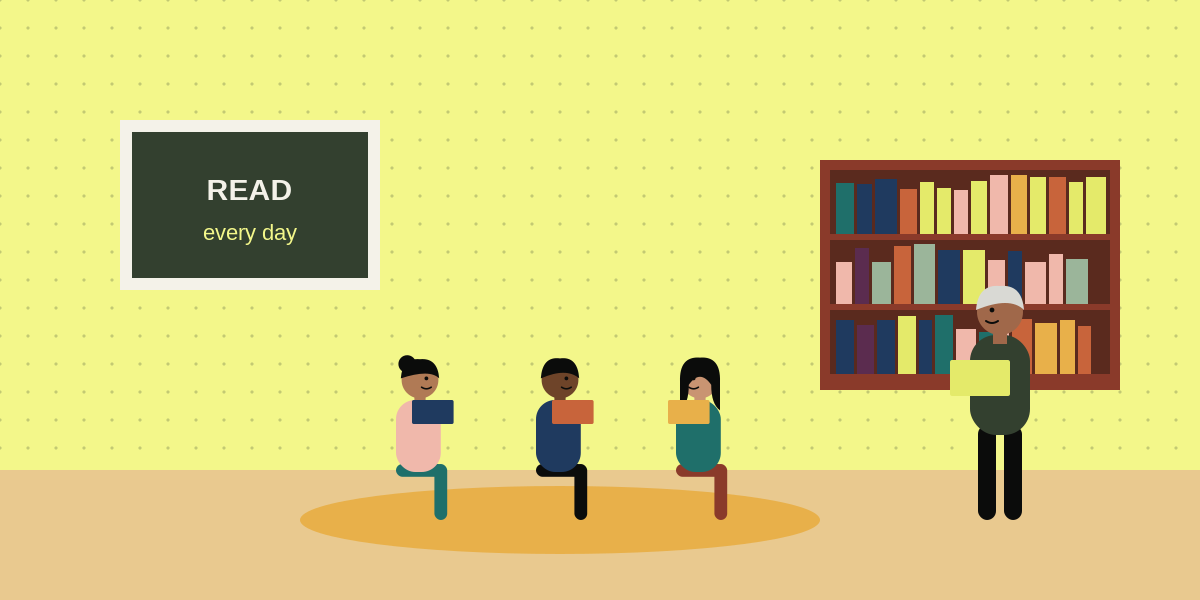
The carpenter father of one student built a simple three-tier shelf from leftover planks, refusing to take money for it. Someone brought an old durrie. Mr. D'Souza painted a sign on a piece of cardboard: READ every day. The corner was ready.
The rule
There was only one rule in the reading corner, and it surprised everyone. There would be no tests on what you read.
"You can read anything," Mr. D'Souza told the class. "You can stop reading a book if it is boring. You can read the same book five times. You can read the pictures if the words are too difficult. Nobody will ask you questions about it unless you want to talk about it."
The students did not quite believe him. In their experience, every page of every book came with questions at the end. But he kept his word. Every day, after the lunch break, there were twenty minutes of what he called quiet reading. Everyone, including Mr. D'Souza himself, picked up a book and read. Nothing else.
For the first week, the room was full of fidgeting, whispering and pages being turned far too quickly. By the third week, something changed. The room became quiet. Not the tense quiet of an exam, but the soft, absorbed quiet of people who have stepped inside a story.
Sonu and the encyclopaedia
Sonu was the boy everyone had quietly given up on. He was twelve, two years older than most of the class, because he had missed school when his family moved for work. He could read, but slowly, and he hated doing it in front of others. In lessons, he looked out of the window. In tests, he left most answers blank.
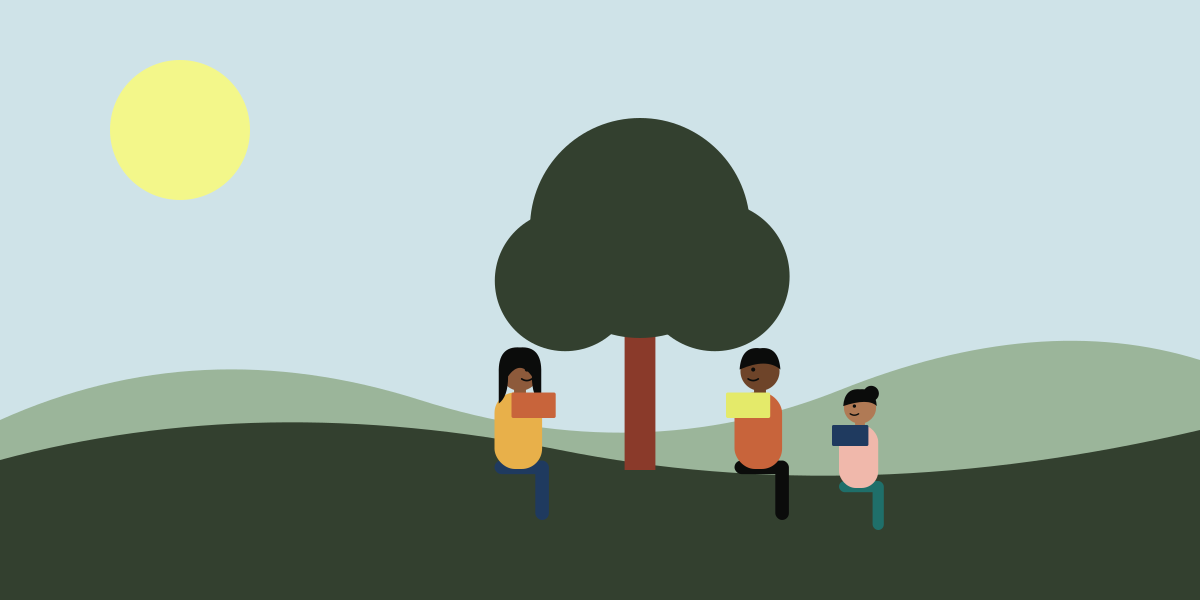
During quiet reading, Sonu picked up the children's encyclopaedia, mostly because it had the most pictures. He opened it at a page about volcanoes. The next day, he went back to the same page. The day after that, he turned to earthquakes. Then to the solar system.
A month later, during a geography lesson about the layers of the Earth, Sonu put up his hand for the first time that year. He explained, in a slightly shaky voice, what magma was and why some mountains were volcanoes and others were not. The class stared at him. Mr. D'Souza said nothing except, "Thank you, Sonu. That was exactly right."
From then on, Sonu was the class expert on anything to do with the planet. Other students started asking him questions. He began reading more slowly and more carefully, because now he had a reason to understand every word.
What changed, and what did not
By the end of the year, the reading corner had grown to more than a hundred and twenty books. A local bank, hearing about it from a parent, donated a second shelf and a set of new storybooks. Two other teachers in the school started reading corners of their own.
The school did not suddenly top the district in exam results. Some students still struggled with fractions. The roof still leaked in the monsoon. But teachers noticed smaller, important things. Students who read regularly wrote longer and more confident answers. They used new words. They asked more questions. Some of the quietest children, like Sonu, found a way to be seen.
When Mr. D'Souza was asked, at a teachers' meeting, what method he had used, he looked a little uncomfortable. "There was no method," he said. "I just gave them books and time, and I did not spoil it with questions."
A letter at the end of the year
On the last day of term, Mr. D'Souza found a folded sheet of paper tucked inside the encyclopaedia. It was from Sonu. It said, in careful handwriting, that he wanted to become a scientist who studies volcanoes, and that he would come back one day to add a book of his own to the corner. Mr. D'Souza kept the letter in his desk drawer for many years.
Lessons for every classroom
Research on reading consistently shows that children who read for pleasure tend to build stronger vocabulary, comprehension and confidence. Yet many schools, especially those with limited budgets, assume that a library requires a separate room, a librarian and a large grant. Mr. D'Souza's corner is a reminder that a beginning can be much smaller.
- Start with what you have. A shelf, a mat and a handful of books are enough.
- Ask the community. Families, local businesses and alumni are often happy to contribute.
- Protect the time. Twenty minutes a day, every day, matters more than an occasional long session.
- Let reading be enjoyable. Not every page needs to be tested.
- Read alongside students. When children see adults reading, they understand it is something worth doing.
If you are a teacher or school leader, you may find our guide on choosing education technology for schools useful too, and you can explore educational events where educators share ideas like this one.
Sources
This is an original short story written by Breitordo. It is fiction and does not use text from any other publication.
Frequently asked questions
Is Mr. D'Souza a real teacher?
No. He is a fictional character in a short story written by Breitordo, inspired by the work of many teachers who build reading spaces with very few resources.